Cockatiel Breeding Guide
Pairing, Eggs, Chicks & Expert Tips
This cockatiel breeding guide walks you through every stage of the process — from selecting compatible pairs and setting up nesting boxes to incubating eggs, raising chicks week by week, and understanding color mutation genetics. Whether you are hatching your first clutch or managing a full aviary, this guide and BirdTracks will help you breed healthy, well-socialized cockatiels with confidence.
Track Your Cockatiels FreeCockatiel Breeding Age: When Are Cockatiels Ready to Breed?
Understanding the correct cockatiel breeding age is one of the most important factors in a successful breeding program. Cockatiels reach sexual maturity between 9 and 12 months of age, but physical maturity and emotional readiness do not arrive at the same time. Responsible breeders wait until both the hen and cock are at least 18 months old before pairing them for the first time. Hens bred before 12 months old face significantly higher risks of egg binding, a potentially fatal condition where the egg becomes stuck in the reproductive tract, and severe calcium depletion that weakens bones and shortens lifespan.
Males generally show breeding readiness earlier through behaviors like singing, head bobbing, heart-wing displays, and tapping their beaks on surfaces. Hens signal readiness by crouching low with raised tails and making soft chirping calls. However, behavioral readiness alone is not enough. Both birds should be at a healthy weight, have completed at least one full molt cycle, and have been on a nutritionally rich diet for several weeks before being introduced to a breeding box. Use BirdTracks to log each bird's hatch date, weight history, and molt records so you can confirm breeding readiness with data rather than guesswork.
Health first
Only breed healthy, well-nourished cockatiels. Both parents should be active, bright-eyed, and free of illness. A veterinary wellness check before breeding season catches hidden problems like respiratory infections, intestinal parasites, or nutritional deficiencies that could doom a clutch.
Age and maturity
Wait until both birds are at least 18 months old. Hens under 12 months risk egg binding and calcium depletion. Cocks mature slightly earlier but patience pays off with stronger chicks, better parenting behavior, and higher fertility rates across the clutch.
Proper housing
Breeding pairs need a spacious cage (minimum 24" x 18" x 24") with a nest box attached to the outside. Place the cage in a quiet, low-traffic area with consistent temperatures and 12-14 hours of light per day to stimulate natural breeding hormones.
Nutrition boost
Increase soft foods, leafy green vegetables, egg food, sprouted seeds, and calcium sources (cuttlebone and mineral blocks) 2-3 weeks before pairing. Good nutrition directly impacts egg quality, fertility rates, and chick health from the moment of hatch.
Cockatiel Breeding Season: When Do Cockatiels Breed?
Cockatiels are not tied to a calendar. In the wild, rainfall decides when they breed; in captivity, the conditions you provide do. That gives you control over the season, and the responsibility to end it.
In the wild (Australia)
Wild cockatiels are nomadic across inland Australia and nest in tree hollows, usually near water. They breed when rain brings food and water: in the south of their range mostly from late winter into summer, elsewhere whenever the rains arrive. In a good year a pair may nest more than once.
In captivity
With steady food, light and warmth, cockatiels can breed year-round, which is exactly why the breeder should set a season. Most run one breeding period a year, often spring and summer when days are naturally long, and keep the nest box out the rest of the time.
What triggers breeding
- Lengthening days: around 12-14 hours of light
- A nest box: often the strongest single trigger
- Soft food and egg food on top of the normal diet
- A stable room, roughly 68-78°F (20-26°C)
- A quiet location and a bonded, mature pair (18+ months)
How often, and rest periods
Limit each hen to 2-3 clutches a year. Some hens want to go back to nest before the last chicks are weaned; that is the moment to take the box away, not to let them carry on. Between seasons, remove the nest box, cut daylight back to about 10 hours and return to a maintenance diet, and give the pair at least 6 months of rest so the hen can rebuild her calcium and condition.
Cockatiel Breeding Box Setup
A proper cockatiel breeding box setup is essential for encouraging your pair to breed and for keeping eggs and chicks safe. Cockatiels are cavity nesters in the wild, so they instinctively seek out enclosed, dark spaces to lay their eggs. The breeding box mimics this natural environment and gives the hen a secure place to incubate.
The ideal cockatiel nest box measures approximately 12 inches long by 12 inches wide by 12 inches tall (30 x 30 x 30 cm). Use untreated plywood or natural hardwood — never pressure-treated lumber, which contains chemicals toxic to birds. The entrance hole should be about 3 inches (7.5 cm) in diameter, positioned near the top of one side, with a small perch or landing platform just below it. Inside, add a concave depression or small wooden insert in the floor to prevent eggs from rolling. Line the bottom with 1-2 inches of clean pine shavings or aspen bedding. Avoid cedar shavings, which release aromatic oils that irritate bird respiratory systems.
How to Breed Cockatiels: Selecting Compatible Pairs
Learning how to breed cockatiels starts with choosing the right pair. The best breeding pairs are unrelated (a quick pedigree check confirms it), healthy, of proper age, and have compatible temperaments. Unlike some parrot species, cockatiels are generally tolerant of paired arrangements, but forcing incompatible birds together leads to aggression, stress, infertile eggs, and poor parenting. If you are breeding for specific color mutations, understanding cockatiel genetics is absolutely essential before making any pairings.
Cockatiel Egg Incubation: Laying, Candling, and Hatching
Cockatiel egg incubation is one of the most exciting parts of the breeding process. Cockatiels typically lay 4-7 eggs per clutch, depositing one egg approximately every 48 hours. First-time hens often produce smaller clutches of 2-3 eggs, while experienced hens commonly lay 5-6. Incubation takes approximately 18-21 days from when the parents begin sitting consistently, with both parents sharing duties — the male usually sits during the day and the female takes over at night. This shared incubation is a beautiful trait that sets cockatiels apart from many other parrot species.
You can candle eggs at 7-10 days to check fertility. Hold each egg gently against a bright, focused light source (a dedicated egg candler or a small LED flashlight works well) in a darkened room. Fertile eggs will show a network of visible red veins radiating from a dark central embryo. Infertile eggs appear uniformly clear or show a faint yellowish yolk shadow with no vein development. Mark each egg with a soft pencil when it is laid and record the date in BirdTracks so the app can automatically calculate expected hatch dates and send you reminders as hatching approaches.
Cockatiel Egg Incubation Timeline
Mark the date and record it in BirdTracks. Expect another egg every 48 hours. Some hens begin sitting immediately while others wait until the second or third egg.
Average clutch is 4-7 eggs. Both parents begin consistent incubation once 2-3 eggs are laid. The hen may temporarily leave the nest to eat and drink.
Check fertility by candling. Fertile eggs show visible veins and a dark embryo. Remove clear (infertile) eggs after day 10 to let parents focus energy on viable eggs.
Fertile eggs appear mostly dark when candled with a visible air cell at the blunt end. The embryo is nearly fully developed and preparing to pip.
Chicks pip (crack the shell from inside) and hatch over 12-48 hours. First-laid eggs hatch first. Do not assist unless a chick has been pipping for over 24 hours.
Parents feed crop milk initially, then regurgitated seeds and soft food. Chicks grow rapidly, gaining weight daily. Eyes open around day 8-10.
Chicks start sampling solid foods on their own. Begin offering sprouted seeds, soft vegetables, and millet alongside parent feeding.
Chicks leave the nest box and learn to fly. Fully independent by 8-10 weeks. Confirm weaning by monitoring weight stability in BirdTracks.
Ideal incubation conditions
Keep the breeding room at 68-78 degrees Fahrenheit (20-26 degrees Celsius) with 40-60% relative humidity. Avoid drafts near nest boxes. Provide 12-14 hours of light per day to maintain breeding hormones and consistent sitting behavior throughout the incubation period.
Egg problems to watch for
Clear eggs after 10 days of incubation are infertile and should be removed. Dead-in-shell eggs may indicate humidity problems, nutritional deficiency, or bacterial contamination. If a hen appears egg-bound (straining, fluffed up, sitting on the cage floor), this is a veterinary emergency requiring immediate professional care.
Tracking a cockatiel clutch
Cockatiel eggs hatch around day 21. Enter the lay date once and the candling window and hatch date follow from it.
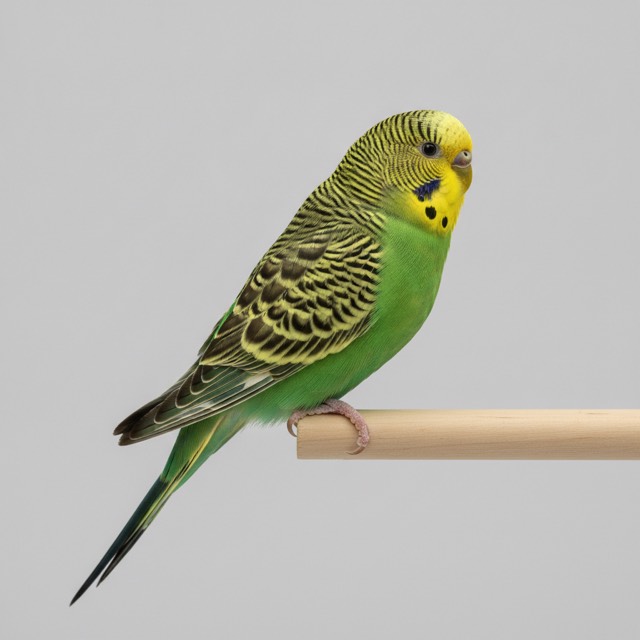
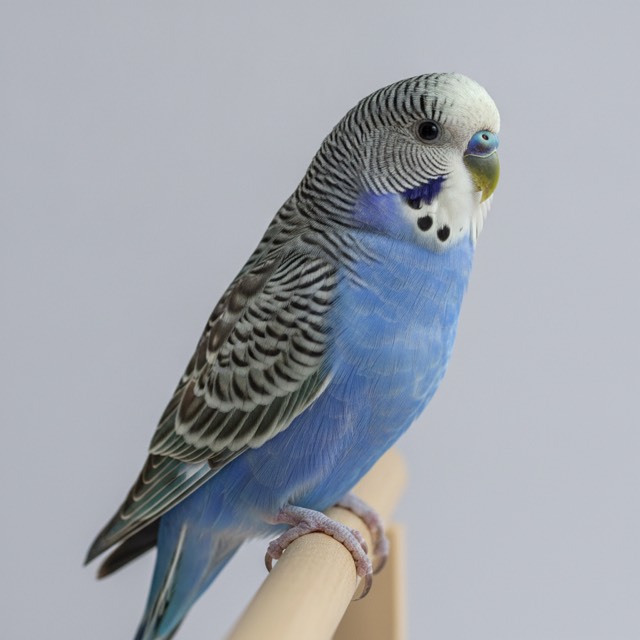
The status line is worked out from the clutch itself — eggs laid, how many were fertile, and the hatch date counted off the lay date. Nothing here is typed in twice.
Cockatiel Chick Care: Week-by-Week Development Guide
Cockatiel chick care requires close monitoring and timely intervention when problems arise. Chicks grow incredibly fast, transforming from tiny, helpless hatchlings weighing around 4-5 grams to fully feathered fledglings in just 5-6 weeks. Whether you let the parents raise the chicks or hand-feed them yourself, tracking their development daily is crucial for catching problems early and ensuring every chick thrives.
Week 1 (Days 1-7): Fragile beginnings
Hatchlings are blind, nearly naked, and completely dependent on parents for warmth and feeding. Crops should appear full after each feeding. Healthy chicks gain 2-3 grams per day. Keep the room warm and avoid unnecessary nest box checks. Weigh chicks once daily at the same time and record every measurement in BirdTracks to establish a growth baseline.
Week 2 (Days 8-14): Eyes open and pin feathers emerge
Eyes begin opening around day 8-10. Pin feathers (small quills encased in keratin sheaths) start emerging on the wings and back. Weight gain accelerates to 3-5 grams per day. This is the ideal window for applying closed leg bands (days 10-14) while the foot is still small enough for the band to slide over the toes. Record band numbers in BirdTracks immediately upon banding.
Week 3 (Days 15-21): Rapid feather growth
Feathers develop rapidly and early color mutation indicators may become visible. Lutino chicks show red eyes and pale yellow down from hatch, while normal grey chicks display darker down. If you plan to hand-raise chicks, pulling them at 2-3 weeks provides a good balance between early socialization and allowing parents to provide initial crop milk nutrition.
Week 4 (Days 22-28): Nearly fully feathered
Chicks are mostly feathered and starting to look like miniature adults. They become more active inside the nest box, flapping wings and exploring. Weight gain begins to slow as feather growth demands more energy. Hand-fed chicks at this stage typically require 3-4 feedings per day of a quality commercial hand-rearing formula mixed to the correct consistency and temperature (104-108 degrees Fahrenheit).
Week 5-6 (Days 29-42): Fledging and early weaning
Chicks begin climbing to the nest box entrance and making short flights. Offer dishes of sprouted seeds, finely chopped vegetables, small pellets, and millet sprays on the cage floor to encourage self-feeding. Continue hand-feeding or allowing parent feeding alongside these solid food offerings. A chick is not weaned simply because it picks at food — true weaning requires sustained weight maintenance on solid food alone.
Parent-raised vs. hand-raised cockatiels
Parent-raised chicks benefit from natural nutrition, immune factors in crop milk, and social learning from adult birds. They are generally healthier and easier to manage but may be less tame without regular human handling. Hand-raised chicks bond strongly with humans and make excellent pets, but they require feeding every 2-4 hours for the first two weeks and carry a higher risk of crop infections if formula is prepared incorrectly. Many experienced breeders use a hybrid approach: allowing parents to raise chicks for the first 2-3 weeks, then pulling them for hand-feeding. This gives chicks the nutritional benefits of crop milk while still achieving strong human bonding. Track feeding schedules and weight curves for each chick in BirdTracks to ensure consistent, measurable progress regardless of your chosen rearing method.
Cockatiel Weaning Schedule
Weaning is the gradual transition from hand-feeding formula or parent feeding to independent eating. Rushing this process is one of the most common mistakes new cockatiel breeders make, and it can lead to dangerous weight loss, crop stasis, and behavioral problems. Every chick weans at its own pace, and patience during this stage pays dividends in the long-term health and temperament of the bird.
Begin the weaning process around 5-6 weeks of age by offering a variety of soft, warm foods alongside regular formula feedings. Good weaning foods include sprouted seeds, warm cooked sweet potato, finely grated carrot, scrambled egg (no seasoning), small pellets moistened with warm water, and millet sprays. Reduce formula feedings gradually — drop from 3-4 daily feeds to 2, then to a single evening feed, and finally eliminate formula altogether when the chick maintains its weight on solid food alone for at least 5 consecutive days. Most cockatiels complete weaning between 8 and 10 weeks of age, though some individuals take up to 12 weeks. Use BirdTracks to log daily weights during the weaning process so you can spot any weight loss immediately and resume supplemental feedings if needed.
Cockatiel Color Mutations Breeding
Cockatiel color mutations breeding is one of the most fascinating aspects of working with this species. Cockatiels have some of the most diverse and beautiful mutations in aviculture, and understanding the genetics behind each mutation allows you to predict offspring colors and plan your breeding program strategically. Cockatiel mutations fall into two genetic categories: sex-linked recessive mutations (carried on the X chromosome) and autosomal recessive mutations (carried on non-sex chromosomes).
Sex-linked mutations such as lutino, pearl, and cinnamon follow predictable inheritance patterns based on the sex of each parent. A male can be visual for a sex-linked mutation or carry it hidden (split), while a female is either visual or does not carry the gene at all. Autosomal mutations like pied and whiteface require both parents to carry the gene for visual offspring to appear. Birds that carry a recessive gene without showing it visually are called "splits," and tracking split genetics is critical for predicting clutch outcomes. BirdTracks lets you record each bird's visual mutation and split genetics so you can see predicted offspring color outcomes before you pair them.
Normal Grey
The wild-type coloring. Grey body, yellow face and crest on males, orange cheek patches. The genetic foundation of all other mutations.
DominantLutino
Beautiful all-yellow to white bird with orange cheek patches and red eyes. One of the most popular and recognizable mutations. Combined with whiteface produces the albino.
Sex-linked recessivePearl
Scalloped feather pattern with yellow or white edging on grey feathers. Males lose visible pearling after their first adult molt but remain genetically pearl.
Sex-linked recessivePied
Random patches of yellow and grey creating a unique pattern on each bird. No two pieds look alike. Heavy pied birds may appear mostly yellow with small grey patches.
Autosomal recessiveCinnamon
Warm brownish-grey coloring replacing the standard grey. A subtle but beautiful mutation that softens the overall appearance of the bird.
Sex-linked recessiveWhiteface
Removes all yellow and orange lipochrome pigment. Creates a striking grey-and-white bird. Combined with lutino creates the all-white albino cockatiel.
Autosomal recessiveTrack Mutations with BirdTracks
BirdTracks lets you record each bird's visual mutation and split genetics in its profile. When you create a breeding pair, the software shows predicted offspring colors and split probabilities before you pair them. This takes the guesswork out of mutation breeding, helps you plan clutches for the specific colors and combinations you want, and ensures you never lose track of which birds carry hidden splits that could produce surprise offspring in future pairings.
Cockatiel Colour Mutations
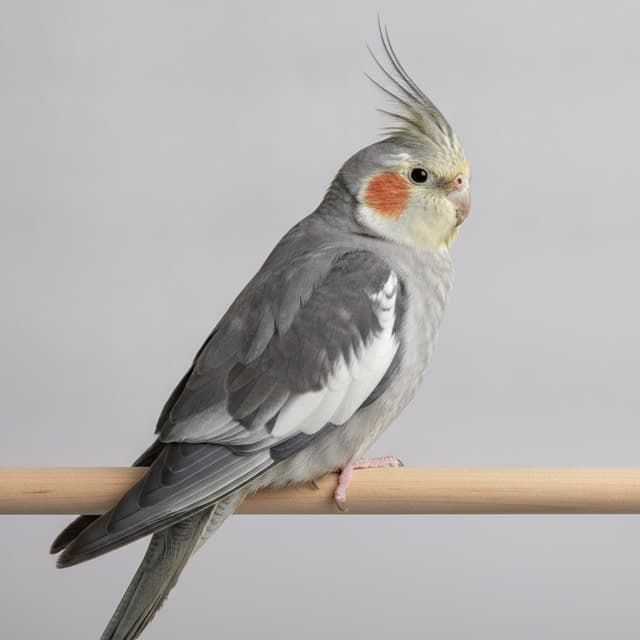
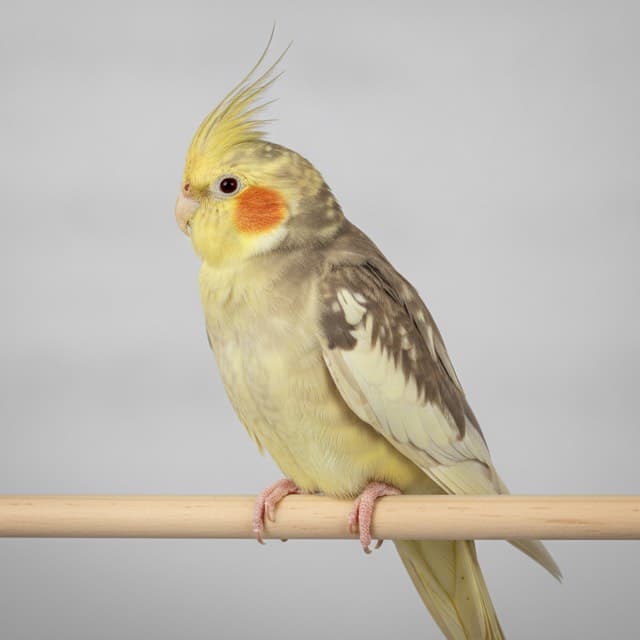
The 8 mutations you are most likely to meet, and how each one is passed on. Every bird below is an illustration of that mutation, not a photograph of a specific bird.
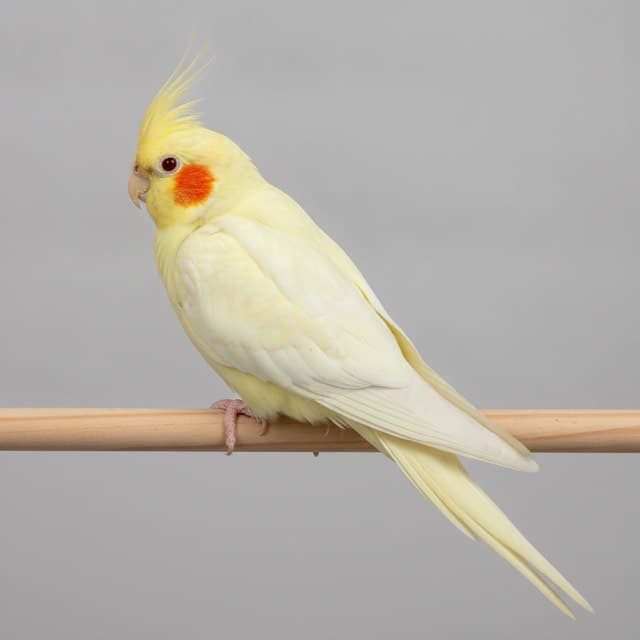
Lutino
Sex-linked
All-yellow/white with red eyes. Most common cockatiel mutation
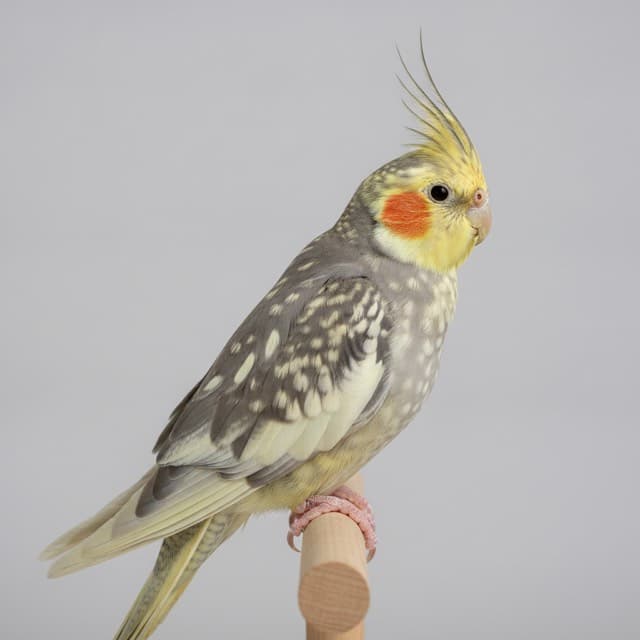
Pearl
Sex-linked
Scalloped feather pattern. Males lose pearling after first molt
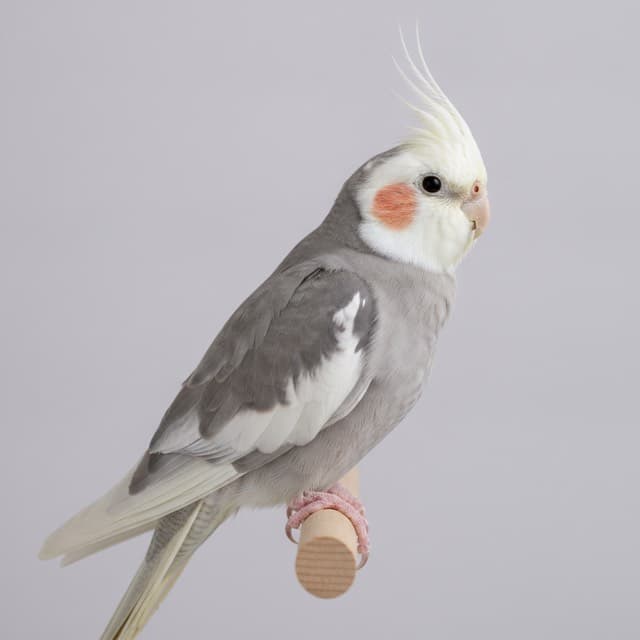
Whiteface
Recessive
Removes all yellow and orange pigment (psittacin)
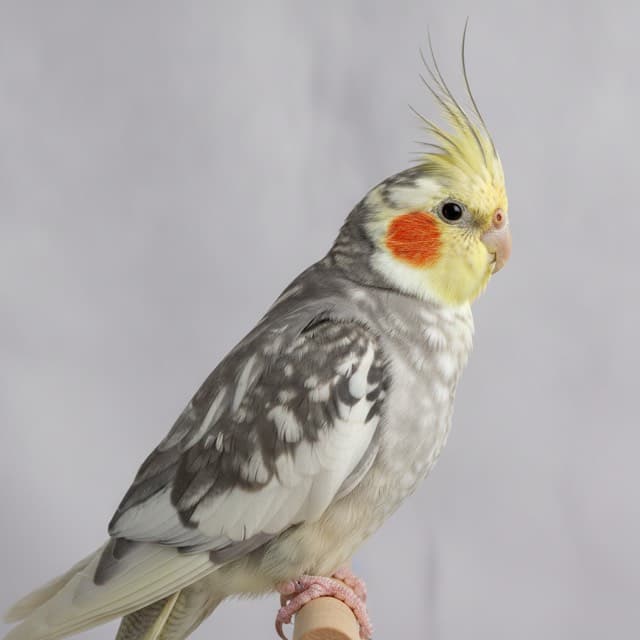
Pied
Recessive
Random patches of melanin-free feathers
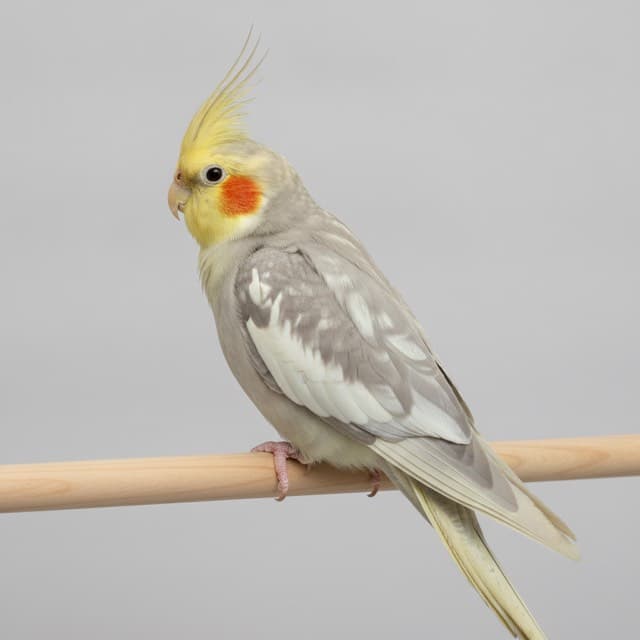
Yellowface
Recessive
Reduced psittacin — yellow face instead of orange cheeks
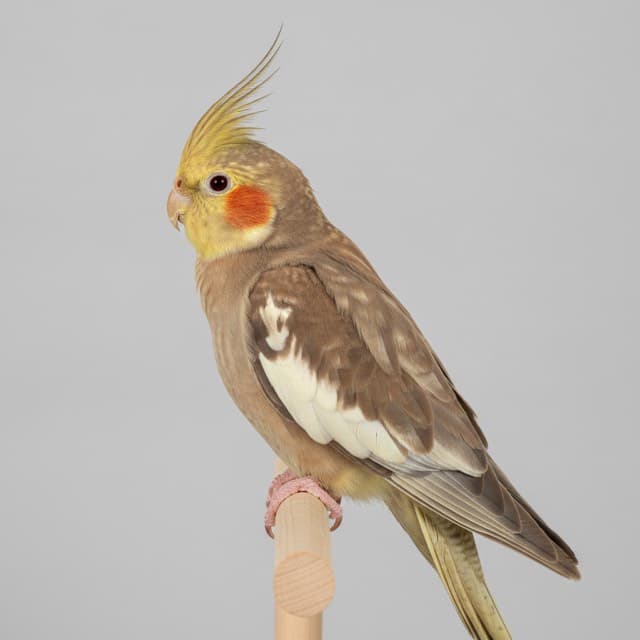
Cinnamon
Sex-linked
Warm brown replacing grey melanin
Silver
Recessive
Diluted melanin giving silvery-grey appearance
Fallow
Recessive
Brown-tinted grey with red eyes
Want to see what a pairing of two of these would throw? Try the free genetics calculator — it draws every predicted chick.
Common Cockatiel Breeding Problems and Solutions
Even experienced cockatiel breeders encounter problems. Knowing how to identify and respond to common issues quickly can mean the difference between saving a chick and losing an entire clutch. Keeping detailed breeding records in BirdTracks helps you spot recurring patterns and address root causes rather than just treating symptoms.
Infertile eggs (clear eggs)
If all eggs in a clutch candle clear after 10 days, the pair may have a fertility issue. Common causes include the male being too young or inexperienced, poor nutrition (especially vitamin E and selenium deficiency), obesity, or the pair simply not mating successfully. Try improving diet, ensuring the perch is stable enough for mating, and giving the pair more privacy. If infertility persists across multiple clutches, consider pairing each bird with a different proven partner.
Egg binding
A hen that appears fluffed up, straining, sitting low on the perch or cage floor, and is lethargic may be egg-bound. This is a life-threatening emergency. Provide immediate warmth (place the hen in a warm, humid environment like a hospital cage at 85-90 degrees Fahrenheit), offer calcium supplementation, and contact an avian veterinarian immediately. Prevention through adequate calcium supplementation and proper breeding age is far better than treatment.
Dead-in-shell (DIS)
Embryos that develop but die before hatching often indicate environmental problems: humidity too low or too high, temperature fluctuations, bacterial contamination of the egg shell, or nutritional deficiencies in the hen. Track DIS rates per pair in BirdTracks. If a specific pair consistently produces DIS eggs, investigate their diet, the nest box hygiene, and the room conditions before attempting another clutch.
Parents not feeding chicks
First-time parents sometimes fail to feed newly hatched chicks. Give them 6-8 hours after hatching before intervening — many new parents figure it out once the chick begins vocalizing. If the crop remains flat and empty after 8 hours, begin emergency hand-feeding with a warm, thin hand-rearing formula. Some parents reject individual chicks while feeding siblings, which may indicate the rejected chick has a health problem.
Feather plucking of chicks
Occasionally a parent bird will pluck feathers from chicks in the nest box. This usually happens when the hen is eager to start a new clutch and views the current chicks as being in the way. Remove the nest box to discourage re-laying and consider pulling the chicks for hand-feeding if they are old enough (at least 2 weeks). Document which parents exhibit this behavior in BirdTracks so you can manage them differently in future seasons.
Why Track Your Cockatiel Breeding with Software?
As your cockatiel breeding program grows beyond a single pair, keeping track of pairs, clutches, genetics, chick weights, band numbers, and lineage becomes overwhelming with paper records or spreadsheets. Missed details lead to accidental inbreeding, lost genetic information, and forgotten hatch dates. BirdTracks was built specifically for breeders like you, providing a centralized digital platform designed around the workflows that cockatiel breeders actually use every day.
Cockatiel Breeding Guide: Frequently Asked Questions
What age can cockatiels start breeding?
Cockatiels reach sexual maturity around 9-12 months, but responsible breeders wait until both the hen and cock are at least 18 months old. Breeding too young increases the risk of egg binding, calcium depletion, and poor parenting behavior. Use BirdTracks to track hatch dates and get notified when each bird reaches breeding age.
When is cockatiel breeding season?
In the wild, cockatiels breed when rain brings food and water: in southern Australia mostly from late winter into summer, elsewhere whenever the rains come. In captivity they can breed year-round, so most breeders run one season a year, often in spring and summer. Breeding is triggered by 12-14 hours of light, a nest box, egg food and a stable 68-78°F room. Limit hens to 2-3 clutches a year, then remove the nest box and rest the pair for at least 6 months.
How many eggs do cockatiels lay per clutch?
Cockatiels typically lay between 4 and 7 eggs per clutch, with one egg appearing approximately every 48 hours. First-time hens may lay smaller clutches of 2-3 eggs, while experienced hens commonly produce 5-6 eggs. Record each egg as it is laid in BirdTracks for automatic hatch date tracking.
How long does it take for cockatiel eggs to hatch?
Cockatiel eggs take 18 to 21 days to hatch from the start of consistent incubation. Both parents share incubation duties, with the male typically sitting during the day and the female at night. Some variation is normal, but eggs that have not hatched by day 23 are unlikely to be viable.
What size breeding box do cockatiels need?
A cockatiel breeding box should measure approximately 12 inches long by 12 inches wide by 12 inches tall (30 x 30 x 30 cm), with a 3-inch (7.5 cm) round entrance hole near the top. Use untreated plywood, line the bottom with pine or aspen shavings, and mount it on the outside of the cage at a high position.
When are cockatiel chicks fully weaned?
Most cockatiel chicks are fully weaned between 8 and 10 weeks of age, though some individuals take up to 12 weeks. A chick is considered weaned when it maintains or gains weight on solid food alone for at least 5 consecutive days without supplemental hand-feeding. Track daily weights in BirdTracks during the weaning transition.
How do I prevent inbreeding in my cockatiel flock?
Maintain detailed pedigree records for every bird and calculate the Coefficient of Inbreeding (COI) before making pairings. Never breed siblings, parents to offspring, or half-siblings. BirdTracks automatically tracks lineage and calculates COI for every potential pairing, making it easy to avoid related pairings even in large flocks.
Can I breed cockatiels year-round?
While cockatiels can technically breed year-round in captivity, limiting hens to 2-3 clutches per year is strongly recommended. Continuous breeding depletes calcium and nutritional reserves, leading to egg binding, poor chick health, and shortened lifespan. Allow at least 6 months of rest between breeding cycles by removing the nest box and reducing daylight hours to 10 per day.
Ready to Start Your Cockatiel Breeding Program?
Join hundreds of cockatiel breeders who use BirdTracks to manage their pairs, track clutches from egg to fledging, record color mutation genetics, and build healthier breeding programs with real data. Sign up today — it is free for 30 days, no credit card required.
Start Tracking Your Cockatiels FreeRelated Guides & Tools
Bird Breeding Software
Track pairs, clutches, pedigrees, and your whole collection in one app — any species.
Bird Breeding Record Keeping
What to record for every bird, pair and clutch, and how to keep it digitally.
Budgie Breeding Guide
Step-by-step guide to breeding budgies successfully.
Color Genetics
Understanding color mutations and inheritance patterns.
Egg Incubation Tracking
Never miss a hatch date with automated egg tracking.