Budgie Breeding Guide
From Pairing to Weaning
This budgie breeding guide covers everything you need to know to breed budgerigars successfully — from selecting healthy pairs and setting up nesting boxes, through egg incubation and week-by-week chick development, to weaning and color genetics. Whether you are raising your first clutch or managing dozens of pairs, this guide and BirdTracks breeding software will keep your program organized and productive.
Track Your Budgie Breeding with BirdTracksBefore You Start: How to Breed Budgies Responsibly
Breeding budgies is rewarding, but it comes with real responsibility. Before pairing your first birds, make sure you have the space, resources, and plan to raise chicks properly. Every aspiring budgie breeder needs to consider the following before introducing a nest box.
First, have a purpose for breeding. Are you breeding for show? To produce specific color mutations? To provide pets for friends and family? Your goals will determine which birds you select, how many pairs you run, and how selective you are with your pairings. Breeding without a plan quickly leads to overcrowding and difficulty finding homes for chicks.
Second, ensure you have homes for the babies. A single pair of budgies can produce 4 to 8 chicks per clutch, and healthy pairs can produce multiple clutches per year. If you are not prepared to house, sell, or rehome dozens of birds, keep your breeding limited and intentional.
Third, establish a relationship with an avian veterinarian before you start breeding. Emergencies like egg binding, injured chicks, or respiratory infections require professional help. Having a vet who already knows your flock can be the difference between saving and losing a bird. Budget for routine checkups and unexpected vet visits as part of your breeding costs.
Budgie Breeding Age and Readiness Signs
Understanding budgie breeding age is critical to producing healthy chicks and protecting your breeding birds from long-term damage. Here is how to determine when your budgies are truly ready to breed.
Minimum Breeding Age
Budgies should be at least 10 to 12 months old before their first breeding attempt. While budgies can become sexually mature as early as 3 to 4 months, their bodies are not fully developed at that age. Breeding immature hens dramatically increases the risk of egg binding, undersized eggs, and poor parenting behavior. Young cocks may fail to feed the hen properly during incubation. Most experienced breeders wait until both birds are at least one year old, which produces larger clutches, stronger chicks, and better parental instincts.
Physical Readiness Signs in Hens
A hen in breeding condition will display a brown or crusty tan cere (the area around the nostrils). Outside of breeding condition, a mature hen's cere is typically pale blue or whitish. When the cere darkens to a chocolate brown and becomes slightly rough in texture, the hen's hormones are active and she is approaching readiness. She may also begin chewing on cage bars, shredding paper, and showing increased interest in dark enclosed spaces — all nesting instincts.
Physical Readiness Signs in Cocks
A mature cock in breeding condition will have a bright, vivid blue cere (in normal varieties) that appears smooth and waxy. He will sing frequently, display head-bobbing courtship behavior, and begin regurgitating food to offer to the hen. This feeding behavior is an important sign that the cock will be a good provider during incubation and chick-rearing, when the hen relies heavily on the male for food. Cocks that do not display feeding behavior may be too young or not yet in condition.
Upper Age Limits
Budgies remain productive breeders until around 4 to 5 years of age. After this point, fertility declines, clutch sizes shrink, and the risk of complications increases for hens. Most breeders retire hens after 4 years and cocks after 5 to 6 years. Use BirdTracks to record each bird's hatch date and track its breeding history so you know exactly when to retire birds from your program.
Budgie Breeding Season: When Do Budgies Breed?
Budgies do not have a breeding season in the way many garden birds do. In the wild the weather decides; in an aviary or breeding room, you do. Here is how both work, and how often a pair should be allowed to breed.
In the wild (Australia)
Wild budgerigars are nomadic, opportunistic breeders. Rather than following a calendar, flocks breed when rain produces a flush of seeding grasses. In the south of their range that is mostly spring and early summer; further north, breeding follows the rains and can happen at other times of year. In a good season a pair may raise several clutches in a row.
In captivity
Kept indoors with steady food, light and warmth, budgies will breed at any time of year, which is why the breeder has to decide when the season starts and ends. Many breeders choose the months when their room is easiest to hold at a stable temperature and avoid pairing up during heat waves or the coldest weeks.
What triggers breeding
- A nest box: the single strongest trigger
- 12-14 hours of light per day
- A stable room, roughly 65-80°F (18-27°C)
- A richer diet: egg food and sprouted seed mimic the post-rain seed flush
- Condition: a brown, crusty cere on the hen and a feeding, singing cock
How often, and rest periods
A hen often starts a second clutch while chicks from the first are still in the box. Most breeders allow no more than two clutches in a row, then remove the nest box and rest the pair for several months before the next round. Cutting the light back toward 10-12 hours and returning to a maintenance diet helps the birds come out of condition. Resting protects the hen from calcium depletion and egg binding.
Log the date each pair goes to nest and each clutch in BirdTracks and you can see at a glance which pairs are due a rest, rather than relying on memory.
Selecting Your Breeding Pairs
Successful budgie breeding starts with choosing the right pairs. Not every male-female combination will produce good results. Here's what experienced breeders look for when selecting pairs.
Health First
Only breed birds in excellent health. Both the male (cock) and the female (hen) should be active, alert, and eating well. Check for clear eyes, smooth feathers, and clean vents. A bird that's been recently ill, is underweight, or shows signs of stress should not be bred until fully recovered. Weigh your birds regularly and ensure they are within a healthy range (30 to 40 grams for standard budgies, 45 to 65 grams for English show budgies) before pairing.
Budgie Color Breeding and Genetics
If you are breeding for specific color mutations, you need to understand basic budgie genetics. Budgie color breeding involves both dominant and recessive mutations. Dominant mutations like the violet factor only need one copy of the gene to appear visually. Recessive mutations like ino (lutino and albino), clearwing, and recessive pied require two copies — one from each parent. Sex-linked mutations like ino and opaline follow different inheritance patterns in cocks versus hens. Knowing what each bird is split for (carrying one copy of a recessive gene without showing it visually) helps you predict offspring colors and plan pairings strategically. BirdTracks tracks split information for every bird and helps you plan pairings for the color varieties you are working toward.
Avoid Inbreeding
Never pair siblings, parents with offspring, or birds that share close common ancestors unless you are an experienced breeder with a specific linebreeding goal. Inbreeding in budgies leads to smaller birds, reduced fertility, feather problems, and weakened immune systems. Use BirdTracks' built-in pedigree and COI calculator to check relatedness before making any pairing.
Compatibility and Bonding
Even when two birds are the perfect genetic match on paper, they still need to bond as a pair. Place potential pairs in adjacent cages for a week or two before introducing them to the same cage. Watch for signs of compatibility: mutual preening, feeding each other through the bars, and sitting close together. If a pair shows persistent aggression after several days together, separate them and try different combinations. Forced pairings rarely produce good results and can lead to broken eggs, injured chicks, or abandoned nests.
Budgie Colour Mutations
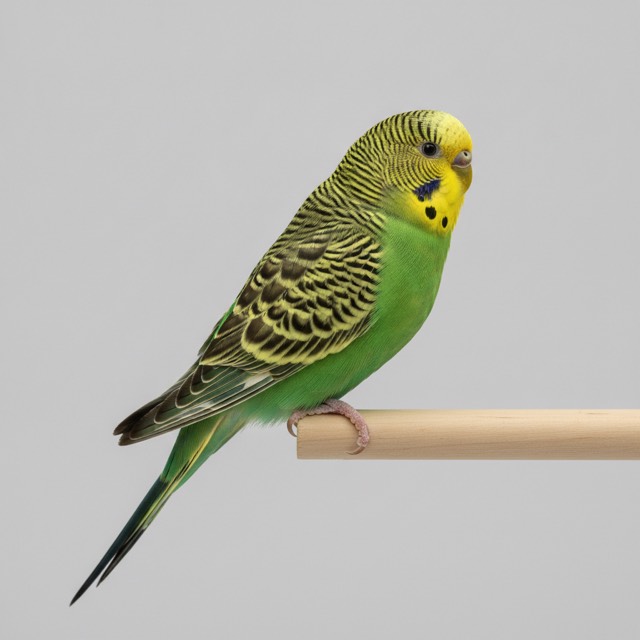
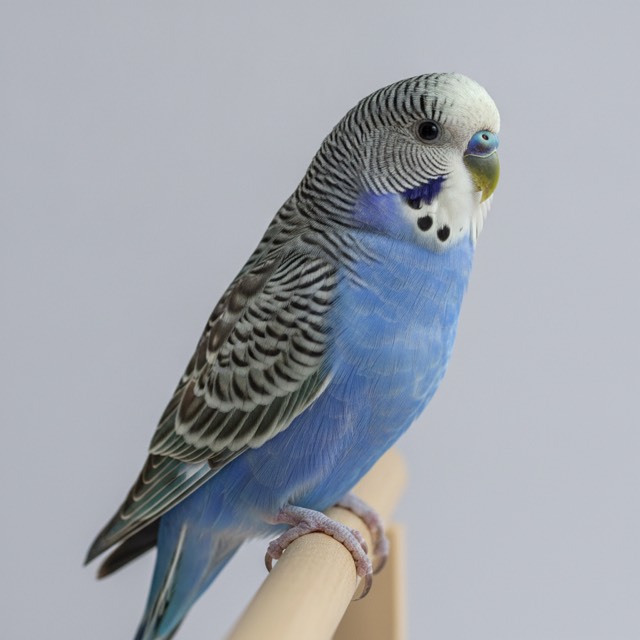
The 8 mutations you are most likely to meet, and how each one is passed on. Every bird below is an illustration of that mutation, not a photograph of a specific bird.
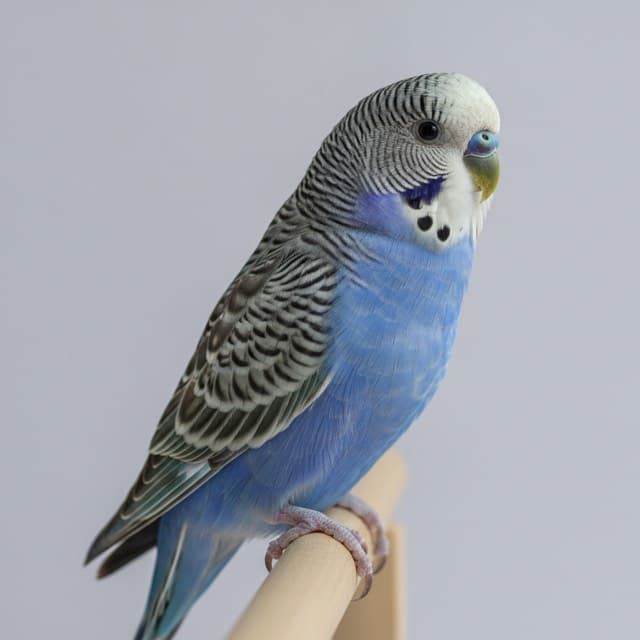
Blue
Recessive
Removes yellow pigment (psittacin), turning green to blue
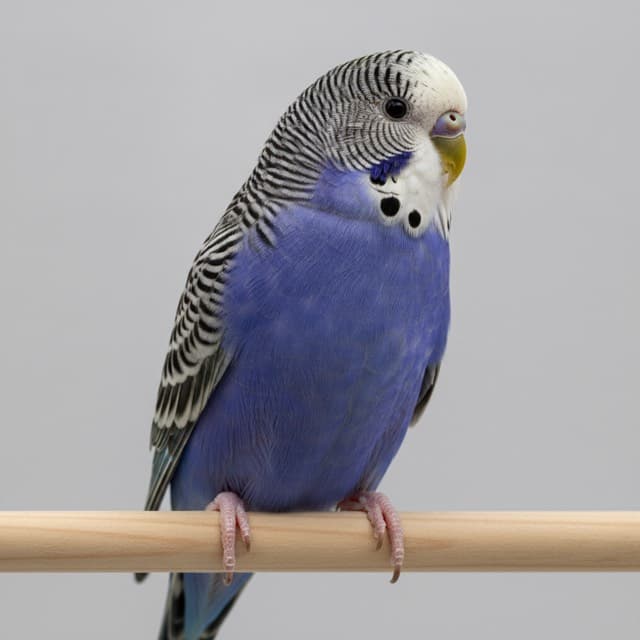
Violet
Dominant
Deepens blue to violet. Best visual on single dark factor cobalt
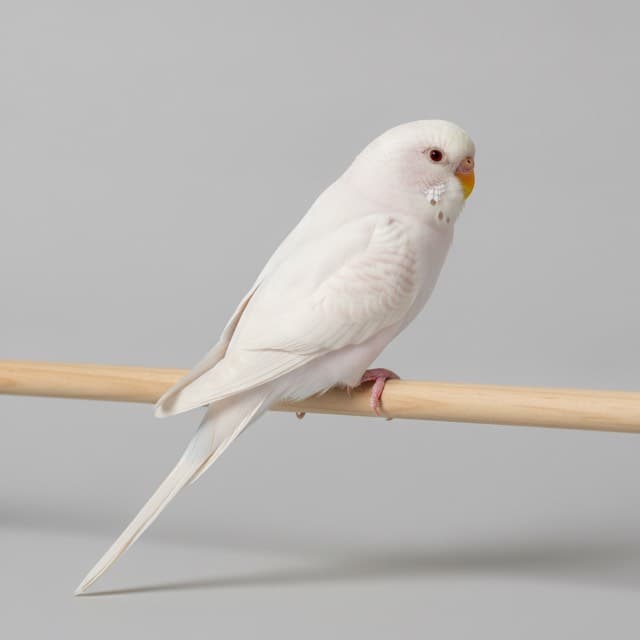
Ino
Sex-linked
Removes all melanin. Lutino (green series) or Albino (blue series)
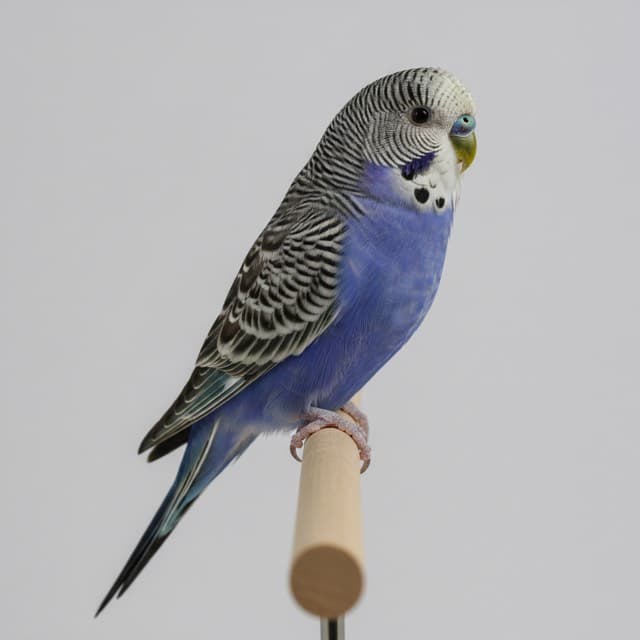
Dark Factor
Incomplete dominant
One copy = Dark Green/Cobalt, two copies = Olive/Mauve
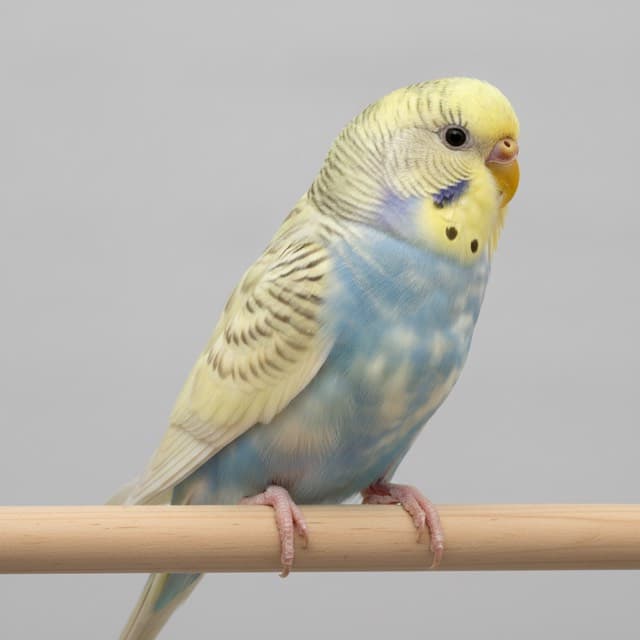
Recessive Pied
Recessive
Large clear patches, typically no iris ring
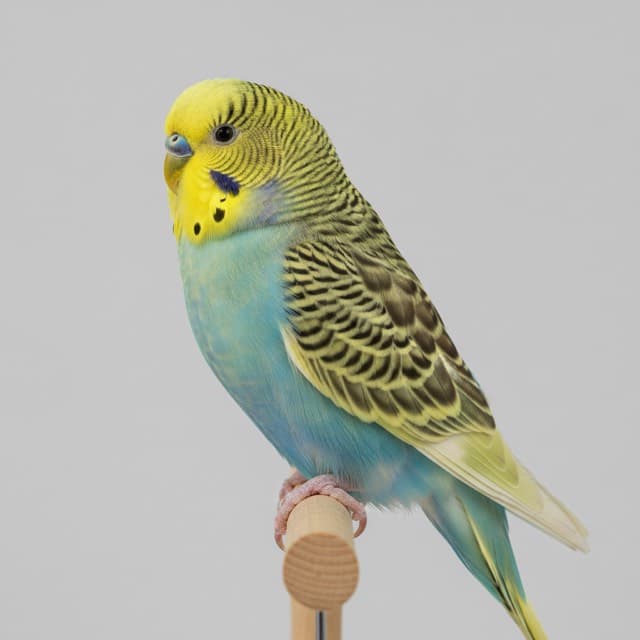
Yellowface
Recessive
Adds yellow to blue series birds. Type I stays on face, Type II spreads to body
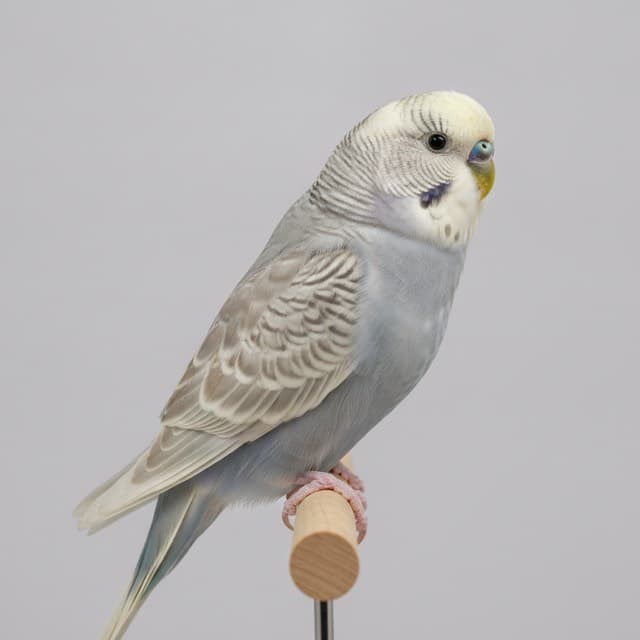
Greywing
Recessive
Gray wing markings with diluted body color
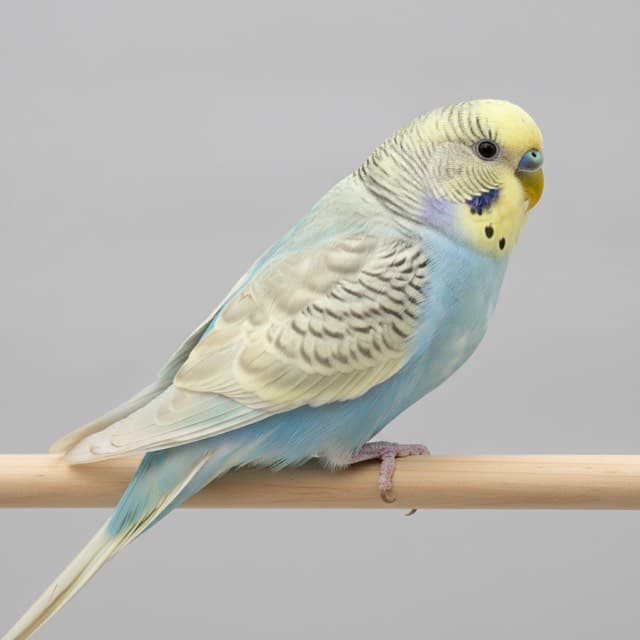
Dilute
Recessive
Dilutes body color to a paler shade
Want to see what a pairing of two of these would throw? Try the free genetics calculator — it draws every predicted chick.
Budgie Nesting Box Setup and Cage Requirements
A proper budgie nesting box setup is essential for the comfort and safety of your breeding pair and their future chicks. Getting the cage and nest box right from the start prevents many common breeding problems.
Breeding Cage
- Minimum size: 24" x 16" x 16" for one pair
- Horizontal bars for climbing (budgies love to climb)
- Located in a quiet area away from high traffic
- Consistent 12-14 hours of light per day
- Stable temperature between 65-80°F (18-27°C)
- Good ventilation without direct drafts
- Sturdy perches at multiple heights for mating
- Separate food and water stations near the nest
Nest Box
- Standard budgie nest box: approximately 9" x 6" x 6"
- Mount on the outside of the cage for easy inspection
- Concave bottom to prevent splayed legs in chicks
- Pine or aspen shavings for bedding (avoid cedar)
- Entry hole sized for budgies (approximately 2" diameter)
- Removable lid for cleaning and chick inspection
- Small perch below entry hole for hen access
- Interior step or ladder for safe entry and exit
Breeding Diet
Breeding hens need extra nutrition. Supplement the standard seed mix with egg food (hard-boiled egg mixed with bread or commercial egg food), fresh leafy greens (spinach, broccoli, kale), cuttlebone for calcium, and mineral blocks. Calcium is especially critical — without enough, hens can become egg-bound, a life-threatening condition where an egg gets stuck in the reproductive tract. Start the enhanced diet 2 to 3 weeks before introducing the nest box.
Sprouted seeds are another excellent addition during breeding season. They are softer, easier to digest, and packed with bioavailable nutrients. Many breeders also offer a small dish of soft food daily — grated carrot, cooked sweet potato, or commercial softfood — especially once chicks have hatched and the parents need high-energy food to keep up with feeding demands.
Budgie Egg Incubation Timeline
Understanding budgie egg incubation helps you know what to expect and when to intervene. Here's the typical progression from egg laying to hatching.
Egg Laying (Days 0-12)
Budgie hens typically lay one egg every other day. A typical clutch is 4 to 8 eggs, though first-time hens may lay fewer. The hen usually begins sitting (incubating) after the first or second egg is laid. She will spend the vast majority of her time in the nest box, leaving only briefly to eat, drink, and relieve herself. The cock will feed her at the nest box entrance or inside the box. Record each egg's lay date in BirdTracks so you can calculate individual expected hatch dates automatically.
Candling (Days 5-7)
After about 5 to 7 days of incubation, you can candle eggs to check for fertility. Hold the egg gently up to a bright light — fertile eggs will show a network of red blood vessels and a small dark spot (the embryo). Infertile eggs (sometimes called "clear" eggs) will appear uniformly translucent. Remove infertile eggs after confirming on a second candling to give fertile eggs more space and warmth. Always candle quickly and return eggs to the nest promptly — prolonged handling cools the eggs and can stress the hen.
Incubation (18 Days Per Egg)
Budgie eggs take approximately 18 days to hatch from the start of consistent incubation. Since eggs are laid every other day and the hen may not start sitting until the second egg, chicks will hatch in a staggered pattern — the first egg hatches first, followed by the rest in 2-day intervals. This staggered hatching is normal for budgies and means you will have chicks of different sizes in the nest simultaneously. During incubation, keep disturbances to a minimum. Check the nest box no more than once daily, and always at the same time so the hen learns to expect it. Excessive or unpredictable nest checks are one of the most common causes of nest abandonment in budgies.
Hatching (Day 18+)
Chicks use an egg tooth to pip (crack) their way out of the shell. The process can take 12 to 24 hours from the first pip to a fully hatched chick. Newly hatched budgie chicks are tiny (about the size of a jellybean), blind, and completely featherless. They depend entirely on the parents for warmth and feeding. Do not help a chick out of its shell unless it has been more than 24 hours since the first pip — intervention usually does more harm than good.
Tracking a budgie clutch
Budgie eggs hatch about 18 days after they are laid, and a hen lays every other day — so one clutch has several hatch dates running at once.
The status line is worked out from the clutch itself — eggs laid, how many were fertile, and the hatch date counted off the lay date. Nothing here is typed in twice.
Budgie Chick Development: Week-by-Week Guide
Budgie chick development progresses remarkably fast. Within six weeks, a blind, featherless hatchling becomes a fully feathered, flying bird. Knowing the weekly milestones helps you spot problems early, time your banding, and prepare for weaning.
Week 1 (Days 1-7): Hatchling Stage
Chicks are born blind, deaf, and completely naked. They weigh approximately 1 to 2 grams at hatching. During the first week, they grow rapidly, roughly doubling their weight every two days. Parents feed crop milk (a protein-rich secretion) initially, transitioning to regurgitated seed and soft food. Check crops daily — a healthy chick will have a visibly full, rounded crop after feeding. Pin feather buds begin appearing under the skin by day 5 to 7. This is the most vulnerable period; chick mortality is highest in the first week.
Week 2 (Days 8-14): Eyes Open, Banding Window
Eyes begin opening around days 8 to 10. Pin feathers push through the skin and feather quills become clearly visible. This is the critical banding window — apply closed leg bands (rings) between days 8 and 10 while the feet are still small enough to slide the band over. After day 12, the foot is typically too large for a closed band. Record every band number in BirdTracks immediately to avoid mix-ups. Chicks are becoming more active and vocal, and you can begin to hear feeding calls from the nest box. Weight should be 15 to 25 grams by end of week two.
Week 3 (Days 15-21): Feather Emergence
Feathers are emerging rapidly from quills. Wing and tail feathers are the first to become clearly visible. Color mutations start becoming identifiable — you can usually distinguish inos, pieds, and dark-factor birds by this stage. Chicks are increasingly mobile within the nest box and will huddle together for warmth. They are noisy and demanding, and the parents are working hard to keep all the crops full. Ensure the parents have an unlimited supply of seed, egg food, and fresh greens to meet the nutritional demands. Clean the nest box carefully, replacing soiled bedding while disturbing the chicks as little as possible.
Week 4 (Days 22-28): Color and Character
Chicks are now mostly covered in emerging feathers, though some downy fluff remains. Colors and patterns are clearly visible, making this the ideal time to record each chick's mutation and markings in BirdTracks. Chicks begin exploring the nest box entrance, poking their heads out to observe the world. Some bold chicks may begin venturing onto the nest box perch. Personality differences become apparent — some chicks are adventurous while others stay deep in the box. Weight should be 25 to 35 grams. Begin preparing weaning cages.
Week 5 (Days 29-35): Fledging
Chicks are fully feathered and begin leaving the nest box. First flights are clumsy — expect crash landings and awkward perching. This is a critical safety period: ensure the cage has no hazards like open water dishes deep enough to drown in, gaps where a panicking fledgling could get stuck, or fans nearby. Chicks begin sampling food on their own, picking at millet sprays and seed on the cage floor, but they still rely primarily on parental feeding. Place millet sprays and shallow seed dishes at cage floor level to encourage self-feeding.
Week 6+ (Days 36-49): Weaning and Independence
Chicks are flying confidently and eating more independently each day. The transition from parent-fed to self-sufficient happens gradually over 1 to 2 weeks. Monitor each chick's crop to confirm it is genuinely filling itself, not just nibbling. Once a chick has maintained its weight while eating independently for 3 to 5 consecutive days, it is safe to move to a weaning cage. Most budgie chicks complete weaning between 5 and 7 weeks, but never rush the process. Record the weaning date for each chick in BirdTracks to track development patterns across your pairs.
Budgie Chick Development Quick Reference
Use this quick-reference table to track your budgie chick development milestones and know what action to take at each stage.
Budgie Weaning Schedule
Weaning is the process of transitioning chicks from parent-feeding to eating independently. It's one of the most critical stages in budgie breeding, and rushing it is a common mistake that can lead to chick illness or death. Follow this weaning schedule for the best results.
Days 28-32: Introduction Phase
While chicks are still in the nest box and being parent-fed, begin placing millet sprays and shallow seed dishes on the cage floor. Chicks will begin to nibble and explore food out of curiosity. This is not true self-feeding yet — they are learning what food is and how to crack seeds. Do not remove parental access during this phase.
Days 33-38: Active Learning Phase
Fledged chicks spend increasing time at the food dishes. They watch their parents eat and mimic the behavior. Offer a variety of foods at floor level: dry seed mix, millet sprays, sprouted seeds, finely chopped leafy greens, and commercial soft food. Keep water in shallow dishes they cannot tip over or drown in. Weigh chicks daily and record weights in BirdTracks. Weight should be stable or slowly increasing during this phase.
Days 38-45: Independence Confirmation
Watch each chick carefully. A chick is ready for the weaning cage when its crop is consistently full from self-feeding (not parental feeding) for at least 3 to 5 consecutive days, and its weight is stable. Move confirmed self-feeders to the weaning cage in small groups — never place a single chick alone, as budgies are social and isolation causes extreme stress. Place newly weaned chicks where they can still see and hear adult birds for comfort.
Days 45+: Post-Weaning Monitoring
Continue weighing weaned chicks daily for the first week after separation. A weight loss of more than 10% is a sign that the chick is not eating enough and may need to return to its parents temporarily. Provide food at multiple levels in the weaning cage, including on the floor. Most chicks settle into independent feeding within a few days of separation, but some need more time. Patience during weaning prevents setbacks and keeps chicks healthy.
Track Weaning Data with BirdTracks
Log the weaning date and weight for each chick in BirdTracks to build a record of how each pair's chicks develop. Over time, you will see patterns — some pairs consistently produce chicks that wean earlier or later, heavier or lighter. This data helps you plan cage rotations, know when to expect chicks to be ready for new homes, and identify your most productive pairs.
Common Budgie Breeding Problems and Solutions
Even experienced breeders encounter problems. Knowing what to watch for and how to respond makes all the difference between a lost chick and a saved one.
Infertile Eggs (Clear Eggs)
If most eggs are infertile, check that the male is actually mating (observe for mating behavior), that both birds are in breeding condition, and that the perches are stable enough for mating. Sometimes moving the pair to a different cage or adding a second perch solves the issue. If a male is consistently infertile across multiple clutches and with different hens, he may need to be replaced. Nutrition can also play a role — vitamin E deficiency is linked to reduced fertility in both sexes.
Egg Binding
A hen that is straining, fluffed up, and sitting on the cage floor may be egg-bound. This is a medical emergency. Provide heat (a warm lamp near the cage), humidity (a warm damp cloth near the cage), and calcium (liquid calcium drops). If the egg does not pass within a few hours, seek an avian vet immediately. Prevention is key: ensure adequate calcium in the diet and do not breed hens that are too young or have a history of egg binding.
Dead-in-Shell (DIS)
When embryos die during incubation, it is often due to temperature fluctuations, insufficient humidity, or the hen leaving the eggs too long. Ensure the breeding room has stable temperatures and that the hen has food and water close to the nest so she does not need to leave for long periods. Excessive nest inspection can also cause the hen to abandon the nest. If DIS is a recurring problem with a specific hen, she may not be a reliable incubator — consider fostering her eggs to a more attentive hen.
Chick Not Being Fed
Check chick crops regularly — a well-fed chick has a visible, rounded crop. If a chick's crop is consistently flat, the parents may be neglecting it (common with runts or in large clutches). You may need to hand-feed with a syringe and commercial hand-rearing formula, or foster the chick to another pair with a smaller clutch. Hand-feeding budgie chicks is delicate work — the formula must be the correct temperature (around 105 degrees Fahrenheit) and delivered carefully to avoid aspiration.
Splayed Legs
Chicks raised on slippery nest box floors can develop splayed legs (legs that stick out to the sides instead of underneath). Prevent this by using a nest box with a concave bottom and appropriate bedding material. If caught early (within the first few days), splayed legs can sometimes be corrected with gentle taping, but prevention is far better than treatment.
Hen Plucking Chicks
Some hens develop a habit of plucking feathers from their chicks, especially as the chicks grow and the hen wants to start a new clutch. If you notice bare patches or blood on chicks, remove the nest box to discourage re-nesting urges and monitor closely. In severe cases, you may need to remove the chicks early and hand-feed or foster them. Document plucking behavior in BirdTracks so you can make informed decisions about whether to breed that hen again — some hens are chronic pluckers and should be retired from breeding.
Nest Box Aggression
Some hens become extremely territorial over their nest box and will bite aggressively during inspections. Develop a consistent routine — check the nest at the same time each day, move slowly, and speak softly. Some breeders gently tap the cage or nest box before opening to give the hen warning. If a hen is truly dangerous to her own chicks (some hens injure chicks when startled), you may need to inspect only when she briefly leaves the box to eat.
Tracking Your Budgie Breeding Program with Software
As your budgie breeding program grows beyond a pair or two, organized record keeping becomes essential. Spreadsheets and notebooks fall apart quickly when you are tracking dozens of birds, multiple active clutches, and complex genetics. Here's how BirdTracks helps budgie breeders stay on top of every detail.
Complete Bird Profiles
Store every budgie’s band number, mutation, splits, photo, parentage, and health history in one searchable profile.
Pair Performance Tracking
See exactly how many clutches each pair has produced, their fertility rate, and how many chicks they’ve raised to weaning.
Automated Hatch Dates
Log each egg’s lay date and BirdTracks calculates the expected 18-day hatch date automatically. Never lose track of when eggs are due.
COI Protection
Before pairing any two budgies, check their COI to ensure you’re not accidentally inbreeding. The system checks up to 5 generations.
Color Genetics Tracking
Record each bird’s visible mutations and known splits. Use this data to plan pairings that produce the color varieties you’re working toward.
Breeding Season Overview
See all your active pairs, current clutches, and upcoming hatch dates on one dashboard. Know exactly what is happening across your entire program.
Frequently Asked Questions About Budgie Breeding
Answers to the most common questions new and experienced budgie breeders ask.
What is the best age to start breeding budgies?
Budgies should be at least 10 to 12 months old before breeding. While they can become fertile as early as 4 months, breeding immature birds leads to smaller clutches, higher chick mortality, egg binding in young hens, and long-term health damage. Most experienced breeders wait until birds are at least one year old. Budgies remain productive breeders until around 4 to 5 years of age, after which fertility gradually declines.
When is budgie breeding season?
Wild budgies in Australia have no fixed season: they breed when rain brings a flush of seeding grasses, which in the south of their range is mostly spring and early summer. In captivity budgies can breed at any time of year, so the breeder sets the season. Breeding is triggered by 12-14 hours of light, a stable 65-80°F room, a richer diet and, above all, a nest box. Limit a pair to two clutches in a row, then remove the box and rest them for several months.
How long does it take for budgie eggs to hatch?
Budgie eggs take approximately 18 days to hatch from the start of consistent incubation. Since hens lay one egg every other day and may not begin sitting until the second egg, chicks hatch in a staggered pattern at roughly 2-day intervals. A clutch of 6 eggs may take 10 to 12 days from the first hatch to the last.
How many eggs do budgies lay per clutch?
A typical budgie clutch contains 4 to 8 eggs. First-time hens often produce smaller clutches of 3 to 5 eggs. Experienced hens in peak condition may lay up to 8 eggs, though clutches larger than 6 can be difficult for the parents to manage. Breeders sometimes foster extra eggs to other pairs to improve survival rates across the clutch.
How do I tell if a budgie egg is fertile?
You can candle budgie eggs after 5 to 7 days of incubation. Hold the egg gently up to a bright, focused light source in a dark room. Fertile eggs will show a network of red blood vessels spreading from a small dark spot (the embryo). Infertile or "clear" eggs appear uniformly translucent with no visible veins or embryo. Always confirm with a second candling before removing any eggs.
When are budgie chicks ready to leave their parents?
Budgie chicks are typically ready to wean and leave their parents between 5 and 7 weeks of age. The key indicator is that the chick has been eating independently for at least 3 to 5 consecutive days. Never remove a chick based on age alone — always confirm it is maintaining its weight while eating on its own. Premature weaning is a leading cause of chick illness and death.
Can I breed budgies from the same clutch together?
No. Breeding siblings (birds from the same clutch or same parents) is inbreeding and should be avoided by beginners. Inbreeding in budgies causes smaller body size, reduced fertility, feather abnormalities, weakened immune systems, and higher chick mortality. Only very experienced breeders use controlled linebreeding with a specific genetic goal. Use a COI (coefficient of inbreeding) calculator like the one built into BirdTracks to check relatedness before making any pairing.
What should I feed budgies during breeding season?
During breeding season, supplement the standard seed mix with egg food (hard-boiled egg mixed with commercial egg food), sprouted seeds, fresh leafy greens like spinach and broccoli, cuttlebone for calcium, and mineral blocks. Calcium is especially critical for hens to prevent egg binding. Start the enhanced diet 2 to 3 weeks before introducing the nest box, and continue through weaning.
How do I set up a budgie nesting box?
Use a standard budgie nest box approximately 9 by 6 by 6 inches, mounted on the outside of the breeding cage. The box should have a concave bottom to prevent splayed legs in chicks, an entry hole about 2 inches in diameter, and a removable lid for cleaning and chick inspection. Line the bottom with pine or aspen shavings — never use cedar, which releases toxic fumes. Place the box in a quiet, draft-free location with consistent lighting.
Ready to Organize Your Budgie Breeding Program?
BirdTracks is built specifically for bird breeders. Track every bird, pair, clutch, egg, and chick in one place. Calculate hatch dates automatically, monitor COI to prevent inbreeding, record color genetics and splits, and see your entire breeding season at a glance. Thousands of breeders trust BirdTracks to keep their programs organized and productive. Start your free account today and see the difference that proper breeding software makes.