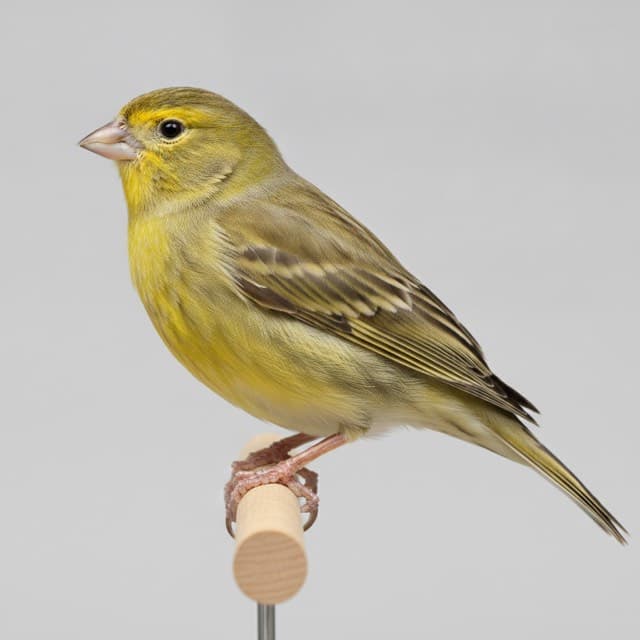
Canary Care Sheet
Incubation figures, feeding by life stage, and the things that actually go wrong with this species — on one page.
Read the full canary breeding guide →- Incubation
- 14 days
- Incubator
- 99.3–99.5°F
- Humidity
- 50–58%
- Lockdown
- 65–75%
Canary Incubation
Forced-air figures. A still-air incubator runs about 101–102°F measured at the top of the egg — setting 99.5°F at the wrong height is one of the most common causes of a full-term chick that never pips.
| Where | Temperature | Humidity |
|---|---|---|
| Incubator | 99.3–99.5°F · 37.4–37.5°C | 50–58% |
| Last 3 days | unchanged — stop turning | 65–75% |
| Breeding room | 60–75°F · 16–24°C | 40–60% |
Canaries are rarely artificially incubated. Day length is the real lever — hens are brought into condition with gradually increasing light, and getting that wrong matters far more than a degree of incubator temperature.
The honest check on humidity is not the hygrometer — it is the scale. An egg should lose roughly 13–15% of its lay weight by the time it pips. Too little loss means the air is too wet; too much means too dry.
Feeding Canarys
What the diet should be day to day, and what changes when a pair goes down to breed.
Every day
A canary seed mix (canary seed with rape) as the staple, plus egg food.
Fresh food
Broccoli, dandelion, chickweed and grated carrot; sprouted seed during breeding.
While breeding
Egg food daily from pairing onward, cuttlebone and shell grit always available.
Feeding chicks
Egg food morning and evening. Nestling canaries are fed almost entirely on soft food.
What goes wrong with canarys
- Colour-feeding red factor canaries is done during the moult only — outside the moult it achieves nothing.
- The moult is nutritionally expensive; feed it properly or next season suffers.
- Obesity in cage-kept cocks is common.
Canary Colour Mutations
The 3 mutations you are most likely to meet, and how each one is passed on. Every bird below is an illustration of that mutation, not a photograph of a specific bird.
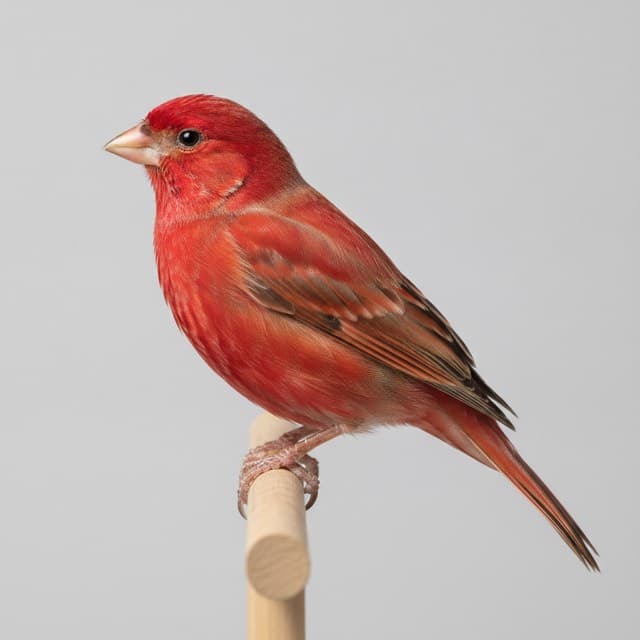
Red Factor
Co-dominant
Red/orange ground color from siskin hybridization
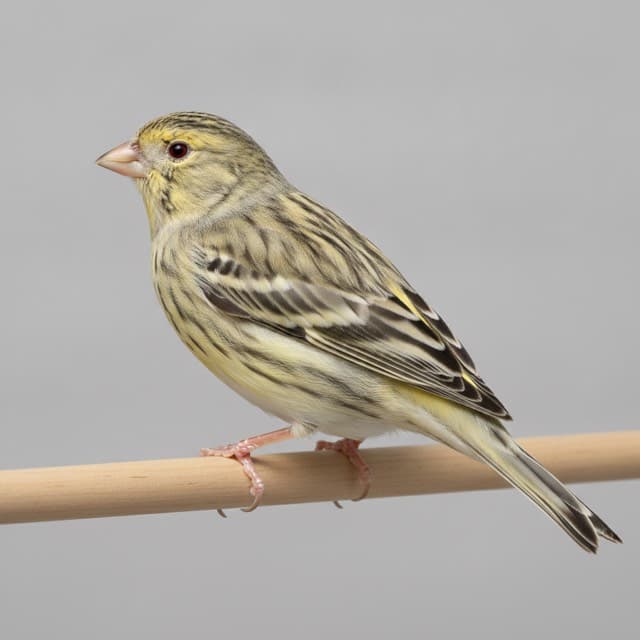
Agate
Sex-linked
Reduced/diluted melanin pattern
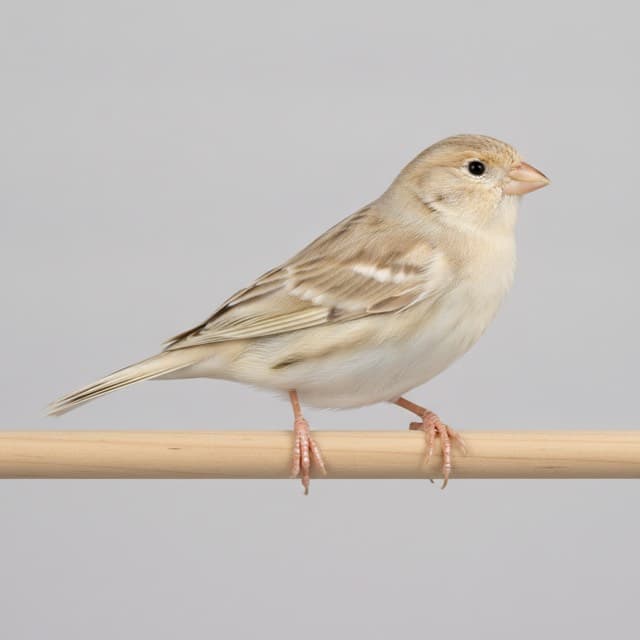
Isabel
Sex-linked
Brown melanin replacing black
Want to see what a pairing of two of these would throw? Try the free genetics calculator — it draws every predicted chick.
General guidance used by breeders, not veterinary advice. Conditions vary by climate, setup and individual bird — watch your birds first and consult an avian vet for anything health-related.
← All species care sheets