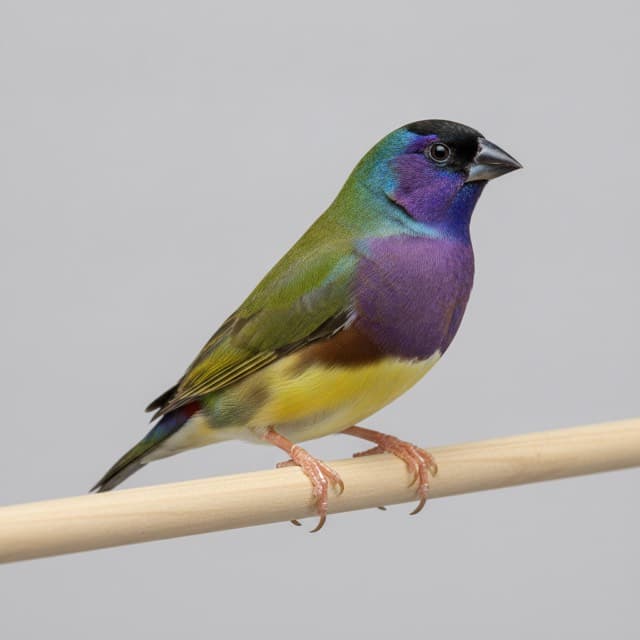
Gouldian Finch Care Sheet
Incubation figures, feeding by life stage, and the things that actually go wrong with this species — on one page.
Read the full gouldian finch breeding guide →- Incubation
- 15 days
- Incubator
- 99.3–99.5°F
- Humidity
- 50–58%
- Lockdown
- 65–75%
Gouldian Finch Incubation
Forced-air figures. A still-air incubator runs about 101–102°F measured at the top of the egg — setting 99.5°F at the wrong height is one of the most common causes of a full-term chick that never pips.
| Where | Temperature | Humidity |
|---|---|---|
| Incubator | 99.3–99.5°F · 37.4–37.5°C | 50–58% |
| Last 3 days | unchanged — stop turning | 65–75% |
| Breeding room | 70–85°F · 21–29°C | 50–70% |
The most warmth-dependent species in this list. Gouldians come from tropical northern Australia and do badly in a cold room — keep the breeding room noticeably warmer than you would for zebras or canaries.
The honest check on humidity is not the hygrometer — it is the scale. An egg should lose roughly 13–15% of its lay weight by the time it pips. Too little loss means the air is too wet; too much means too dry.
Feeding Gouldian Finchs
What the diet should be day to day, and what changes when a pair goes down to breed.
Every day
A seed mix formulated for Gouldians, with egg food and soft food available.
Fresh food
Greens and sprouted seed; live food is valuable during breeding for pairs that take it.
While breeding
Egg food daily plus extra protein. Cuttlebone and shell grit available at all times.
Feeding chicks
Egg food and live food morning and evening. Gouldians are more likely than zebras to abandon a nest if soft food is short.
What goes wrong with gouldian finchs
- Air-sac mite is the classic Gouldian problem — clicking, open-beak breathing and tail bobbing warrant immediate vet attention.
- They need more protein through the moult than other finches, and a bad moult carries into the next season.
- Cold rooms cause losses. This species is less forgiving than the rest.
Gouldian Finch Colour Mutations
The 6 mutations you are most likely to meet, and how each one is passed on. Every bird below is an illustration of that mutation, not a photograph of a specific bird.
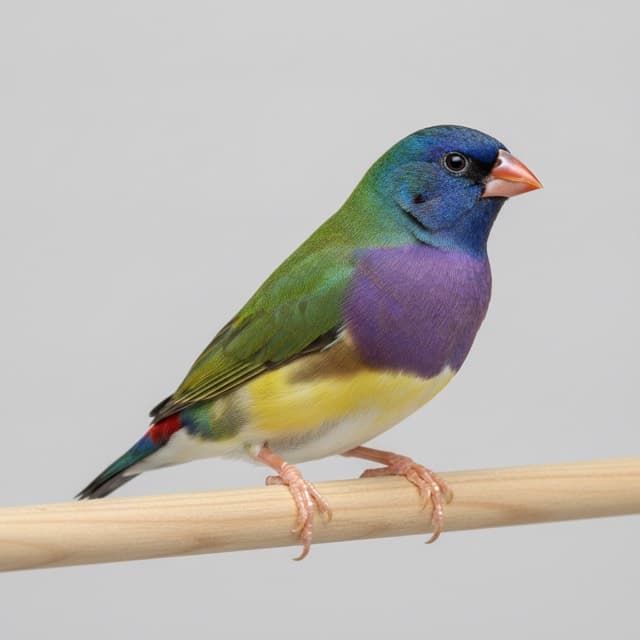
Black Cheek
Recessive
Black cheek patches instead of orange
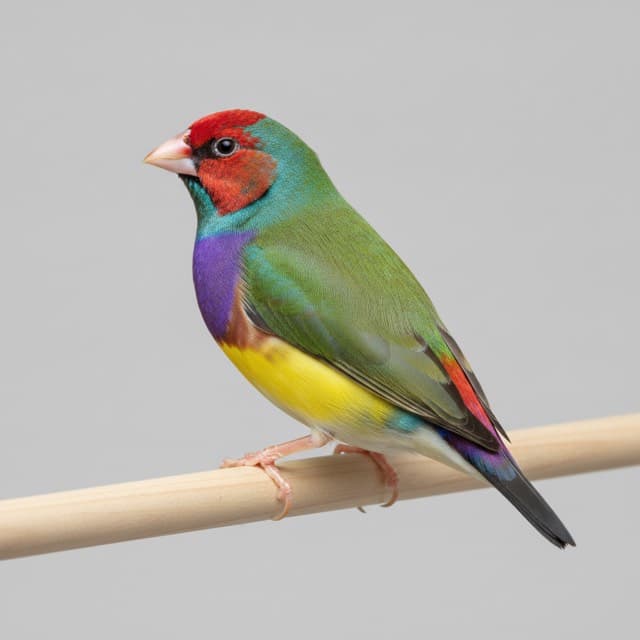
Red Head
Dominant
Red head coloring, dominant over black head
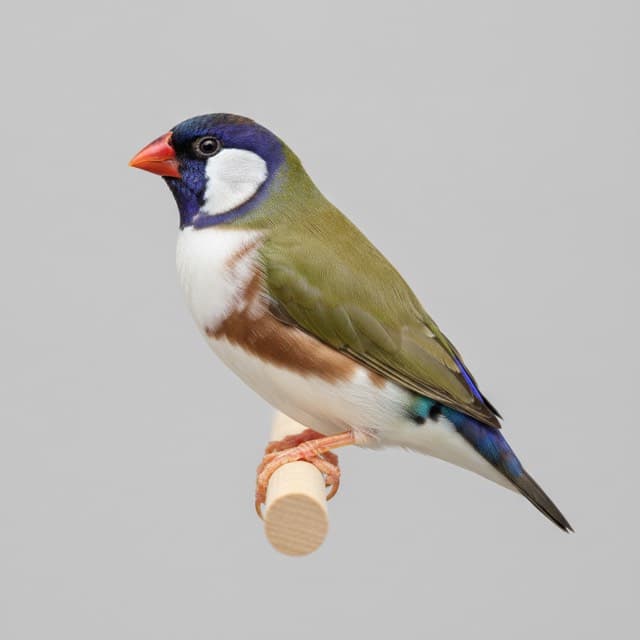
Chestnut Flanked White
Sex-linked
White body with retained flank markings
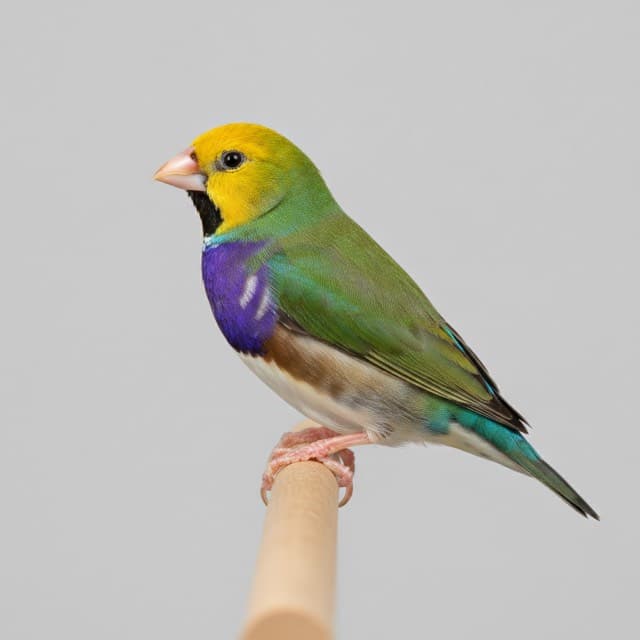
Yellow Head
Sex-linked
Yellow/orange head color — sex-linked recessive
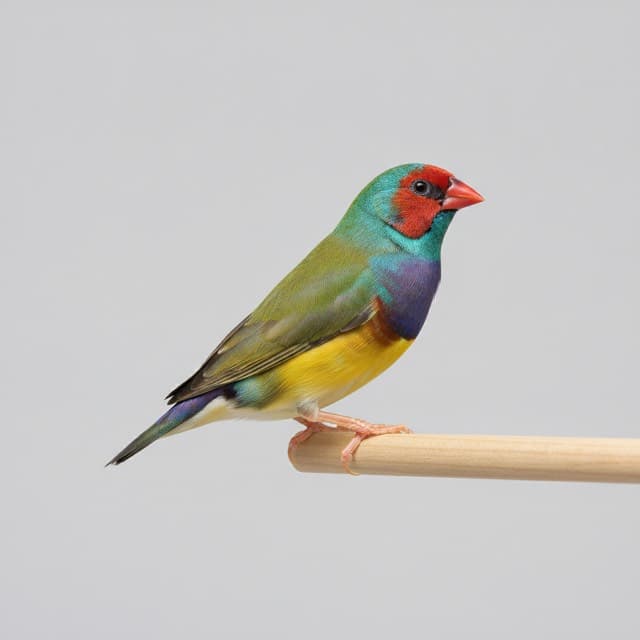
Black Breast
Dominant
Extended breast bar markings
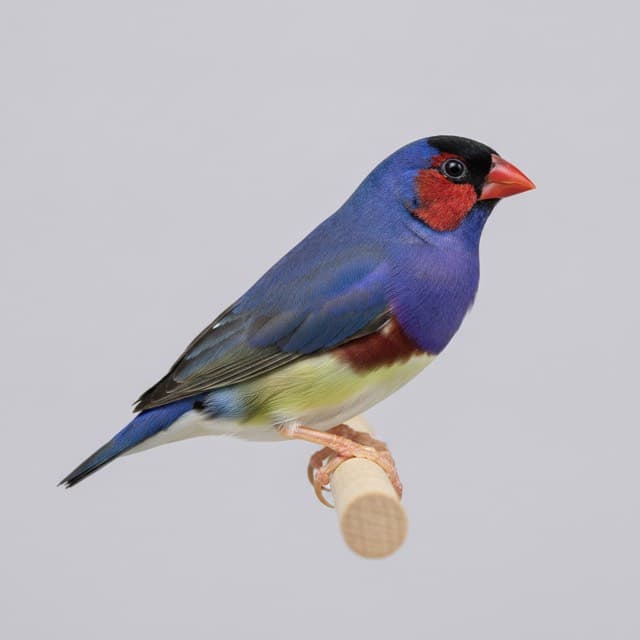
Blue Body
Recessive
Reduces psittacin (yellow pigment), turning green body plumage to blue
Want to see what a pairing of two of these would throw? Try the free genetics calculator — it draws every predicted chick.
General guidance used by breeders, not veterinary advice. Conditions vary by climate, setup and individual bird — watch your birds first and consult an avian vet for anything health-related.
← All species care sheets