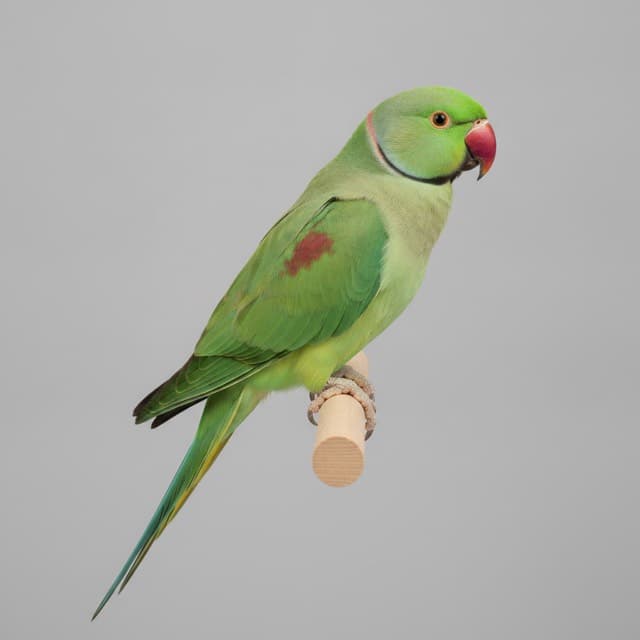
Indian Ringneck Care Sheet
Incubation figures, feeding by life stage, and the things that actually go wrong with this species — on one page.
- Incubation
- 23 days
- Incubator
- 99.3–99.5°F
- Humidity
- 50–55%
- Lockdown
- 65–75%
Indian Ringneck Incubation
Forced-air figures. A still-air incubator runs about 101–102°F measured at the top of the egg — setting 99.5°F at the wrong height is one of the most common causes of a full-term chick that never pips.
| Where | Temperature | Humidity |
|---|---|---|
| Incubator | 99.3–99.5°F · 37.4–37.5°C | 50–55% |
| Last 3 days | unchanged — stop turning | 65–75% |
| Breeding room | 65–85°F · 18–29°C | 45–65% |
Ringnecks often go down to breed earlier in the year than other species — pairs may be in the box in late winter.
The honest check on humidity is not the hygrometer — it is the scale. An egg should lose roughly 13–15% of its lay weight by the time it pips. Too little loss means the air is too wet; too much means too dry.
Feeding Indian Ringnecks
What the diet should be day to day, and what changes when a pair goes down to breed.
Every day
Pellets for around 60–70% of intake with a parakeet seed mix alongside.
Fresh food
Greens, vegetables, sprouted seed and pulses. Ringnecks take soaked legumes well.
While breeding
Cuttlebone and mineral block available; egg food two or three times a week.
Feeding chicks
Egg food daily plus soaked pulses and soft foods.
What goes wrong with indian ringnecks
- Strong chewers — they will destroy a thin nest box and any soft fitting.
- Prone to obesity on a seed-heavy diet.
Indian Ringneck Colour Mutations
The 8 mutations you are most likely to meet, and how each one is passed on. Every bird below is an illustration of that mutation, not a photograph of a specific bird.
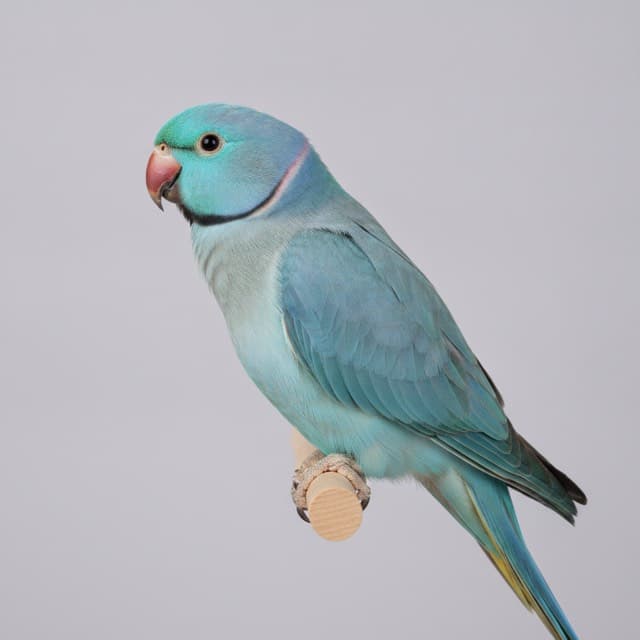
Blue
Recessive
Removes psittacin (yellow pigment), turning green to blue
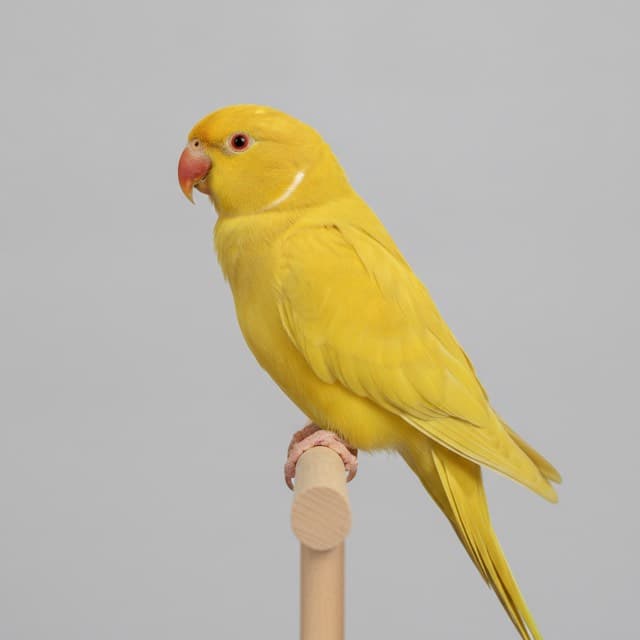
Lutino
Sex-linked
Removes all melanin producing bright yellow bird with red eyes
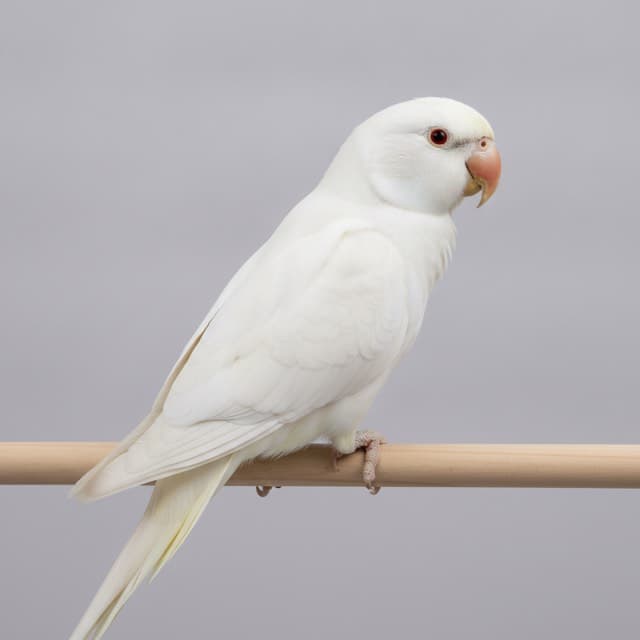
Albino
Recessive
Combination of blue + ino. All-white bird with red eyes. Requires both blue and lutino genes
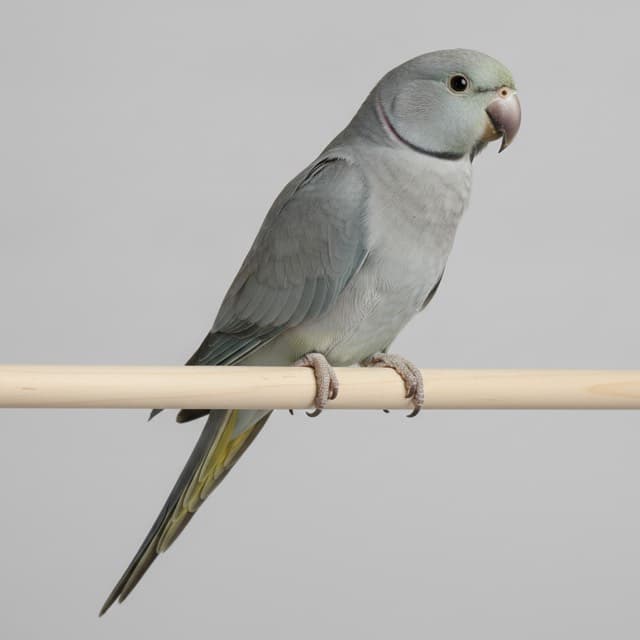
Grey
Dominant
Adds grey to body color producing grey-green or olive tones
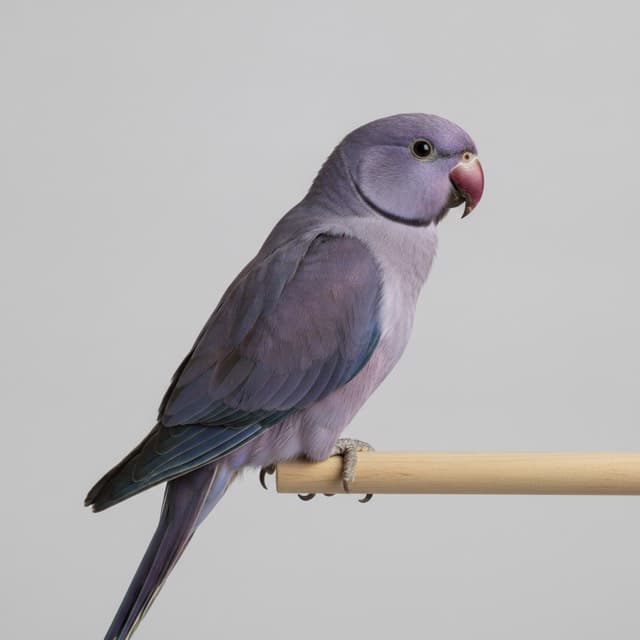
Violet
Dominant
Violet factor deepening blue coloration
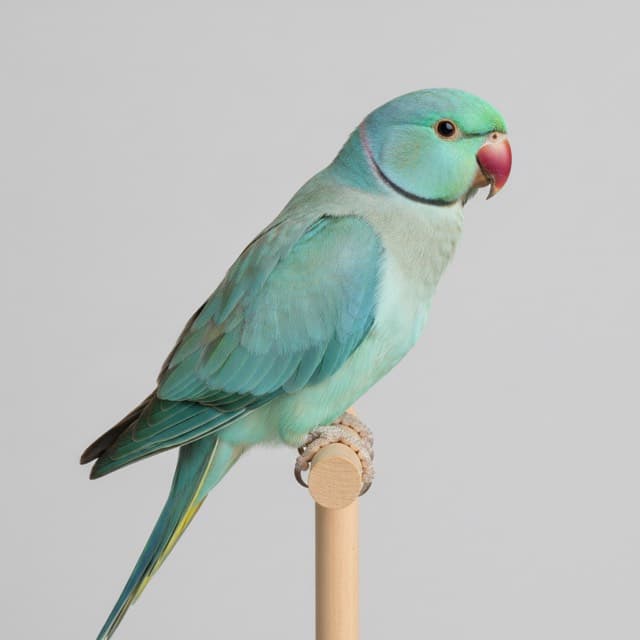
Turquoise
Recessive
Partial reduction of psittacin giving turquoise/aqua tones
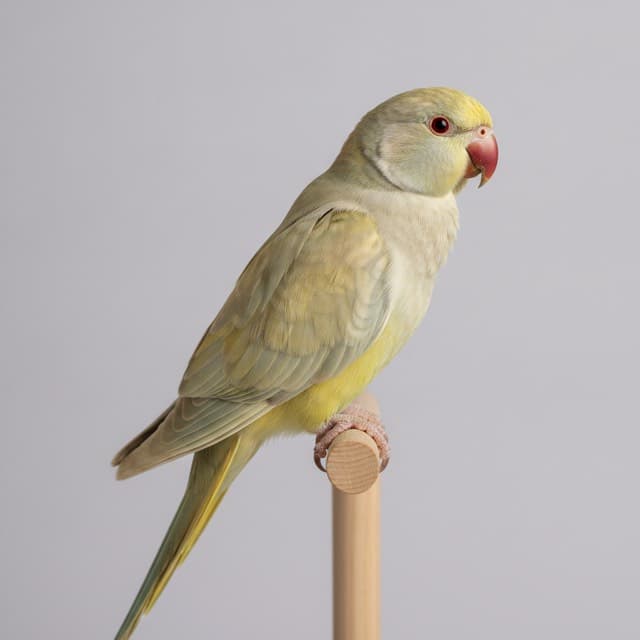
Lacewing
Sex-linked
Combination of ino + cinnamon. Pale body with faint brown wing markings
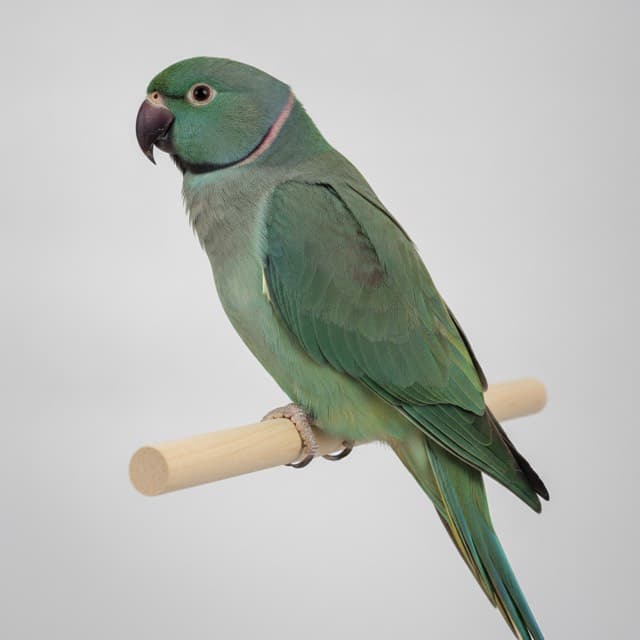
Dark Factor
Incomplete dominant
One copy = darker shade (dark green/cobalt), two copies = olive/mauve
Want to see what a pairing of two of these would throw? Try the free genetics calculator — it draws every predicted chick.
General guidance used by breeders, not veterinary advice. Conditions vary by climate, setup and individual bird — watch your birds first and consult an avian vet for anything health-related.
← All species care sheets