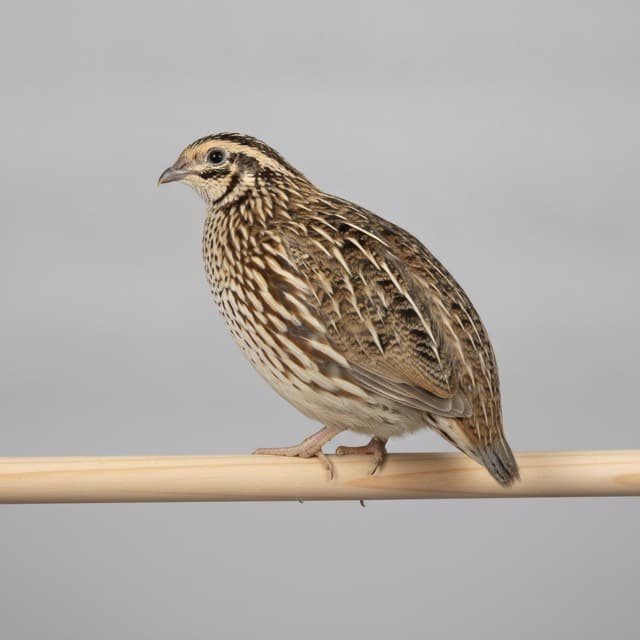
Quail (Coturnix) Care Sheet
Incubation figures, feeding by life stage, and the things that actually go wrong with this species — on one page.
- Incubation
- 17 days
- Incubator
- 99.3–99.5°F
- Humidity
- 45–55%
- Lockdown
- 65–70%
Quail (Coturnix) Incubation
Forced-air figures. A still-air incubator runs about 101–102°F measured at the top of the egg — setting 99.5°F at the wrong height is one of the most common causes of a full-term chick that never pips.
| Where | Temperature | Humidity |
|---|---|---|
| Incubator | 99.3–99.5°F · 37.4–37.5°C | 45–55% |
| Last 3 days | unchanged — stop turning | 65–70% |
| Breeding room | 55–80°F · 13–27°C | 40–60% |
Coturnix rarely go broody in captivity, so an incubator is the normal route rather than the exception. Run them slightly drier than parrots through incubation.
The honest check on humidity is not the hygrometer — it is the scale. An egg should lose roughly 13–15% of its lay weight by the time it pips. Too little loss means the air is too wet; too much means too dry.
Feeding Quail (Coturnix)s
What the diet should be day to day, and what changes when a pair goes down to breed.
Every day
A game-bird crumble — this is the key difference from every other species here. Quail need far more protein than poultry: roughly 24–28% for chicks and around 20% for laying hens.
Fresh food
Greens and mealworms as supplements only; the crumble should stay the staple.
While breeding
Keep laying hens on high-protein feed with added calcium (oyster shell) for shell quality.
Feeding chicks
Chicks go onto 24–28% game-bird starter from day one. Standard chick feed is too low in protein.
What goes wrong with quail (coturnix)s
- Feeding standard chicken layer feed is the most common quail mistake — the protein is far too low and laying collapses.
- They are ground birds: damp bedding causes disease quickly.
- Quail startle upward and can break their necks on a hard roof. Keep enclosures low or soft-topped.
Quail (Coturnix) Colour Mutations
The 3 mutations you are most likely to meet, and how each one is passed on. Every bird below is an illustration of that mutation, not a photograph of a specific bird.
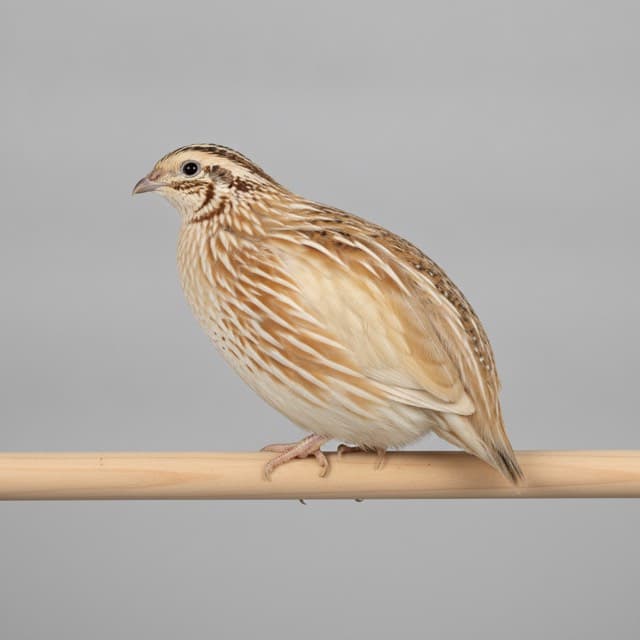
Italian
Recessive
Golden/buff coloring with lighter breast and distinctive face markings
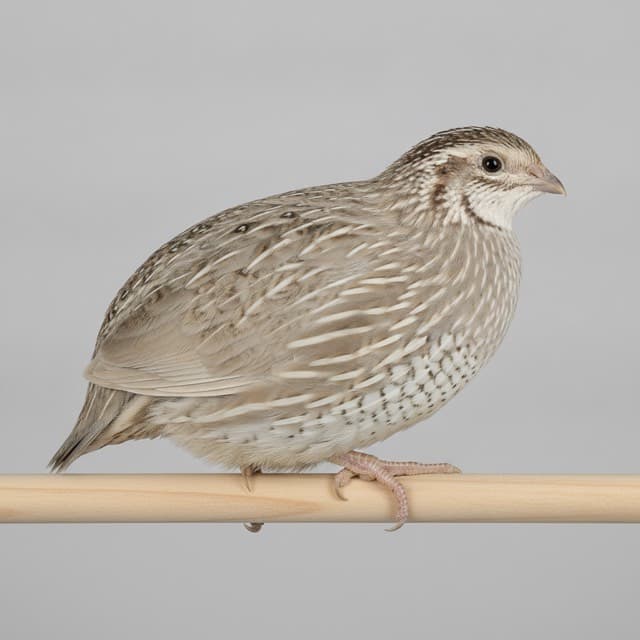
Fee
Recessive
Extreme dilution producing very light, pale plumage
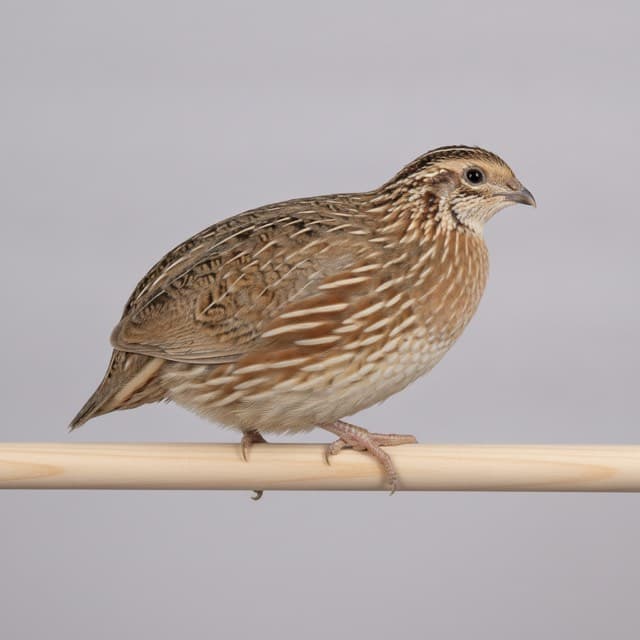
Rosetta
Recessive
Dark brown with reddish tones, similar to Tibetan but recessive
Want to see what a pairing of two of these would throw? Try the free genetics calculator — it draws every predicted chick.
General guidance used by breeders, not veterinary advice. Conditions vary by climate, setup and individual bird — watch your birds first and consult an avian vet for anything health-related.
← All species care sheets